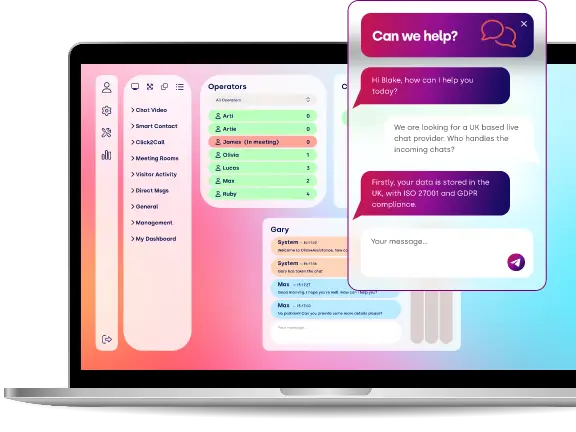
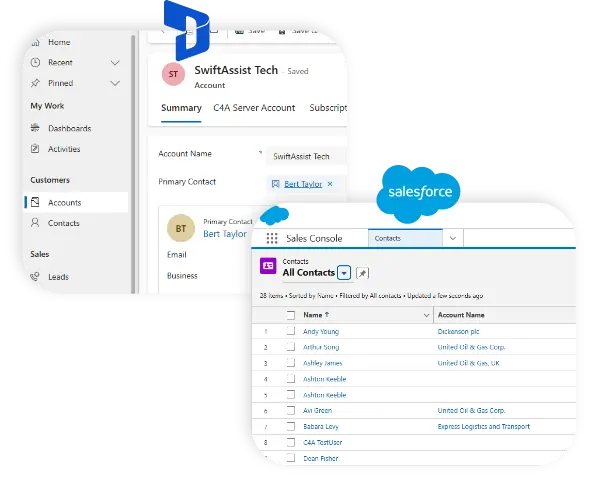
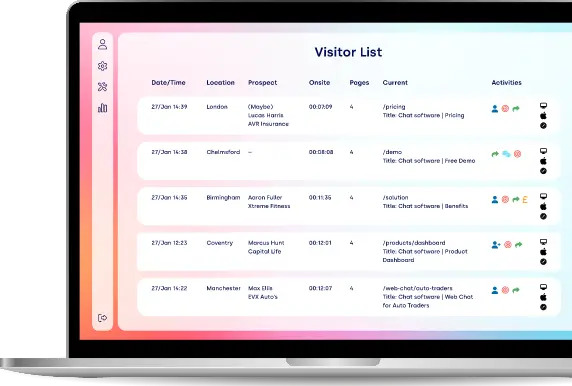
Find answers to frequently asked questions about Click4Assistance website deployment, including setup, configuration, Experience customisation, Live Chat and AI Agent deployment, security, website requirements and delivering customer engagement across digital channels.
How long does it take to deploy Click4Assistance?
Implementation times vary depending on the products selected, the complexity of the deployment and any required connections.
Many organisations can deploy Live Chat or AI-powered customer engagement within days, while larger enterprise implementations involving multiple departments, AI Agents and business system connections may be delivered in phases.
A structured implementation plan helps ensure a smooth deployment.
What is the first step when implementing Click4Assistance?
The first step is to define the objectives of the deployment.
Typical objectives include:
- Improving customer service.
- Reducing telephone demand.
- Increasing digital self-service.
- Supporting advisors with AI.
- Improving customer satisfaction.
- Automating repetitive enquiries.
Clearly defined objectives help shape the implementation and provide measurable outcomes.
Should organisations deploy everything at once?
Not necessarily.
Many organisations achieve the best results by introducing functionality in stages.
A phased deployment allows teams to gain confidence, refine customer journeys and gather feedback before expanding the platform to additional departments or communication channels.
What is a pilot deployment?
A pilot deployment introduces the platform to a limited group of users or a single department before wider rollout.
Pilots allow organisations to:
- Validate configuration.
- Gather user feedback.
- Measure performance.
- Refine workflows.
- Confirm business benefits.
Successful pilots often provide the foundation for wider adoption across the organisation.
Who should be involved in an implementation project?
Successful implementations typically involve representatives from several business areas.
These may include:
- Project Management.
- Customer Services.
- IT.
- Operations.
- Information Security.
- Marketing.
- Training.
- Business Owners.
Early collaboration helps ensure the platform meets both technical and operational requirements.
Should administrators receive training?
Yes.
Administrators play a key role in managing users, Experiences, routing, AI configuration, reporting and ongoing optimisation.
Providing administrator training helps organisations become self-sufficient while reducing the need for ongoing support.
How should advisors be introduced to the platform?
Advisor training should focus on practical day-to-day usage rather than technical configuration.
Typical training includes:
- Managing conversations.
- Using the desktop application.
- Handling AI escalations.
- File transfer.
- Internal notes.
- Customer service best practice.
Providing hands-on training helps advisors become productive more quickly.
Should AI be introduced gradually?
Yes.
Many organisations begin with a limited number of well-defined AI use cases before expanding to additional services.
This phased approach allows knowledge to mature, governance processes to develop and staff confidence to increase over time.
How should organisations measure implementation success?
Success should be measured against the objectives established during project planning.
Typical measures include:
- Customer satisfaction.
- Reduced response times.
- Increased digital engagement.
- AI resolution rates.
- Reduced contact centre demand.
- Advisor productivity.
- Self-service adoption.
Regular reporting helps organisations demonstrate the value of the deployment and identify opportunities for further improvement.
Best practice for a successful deployment
Organisations that achieve the greatest long-term success typically follow a structured implementation approach.
Recommended practices include:
- Define clear business objectives.
- Start with a manageable scope.
- Train administrators and advisors.
- Test thoroughly before launch.
- Monitor customer feedback.
- Review reporting regularly.
- Continuously optimise AI, workflows and customer journeys.
Successful deployment is not simply about implementing software—it is about embedding new ways of delivering better customer engagement across the organisation.