














AI Agent for Travel: A Guide to Smart Customer Service
AI agents for travel transform customer service by handling high-volume enquiries, delivering instant responses, and supporting customers across the full travel journey. They reduce pressure on human teams, improve response consistency, and ensure reliable service during peak demand, disruption, and seasonal spikes.
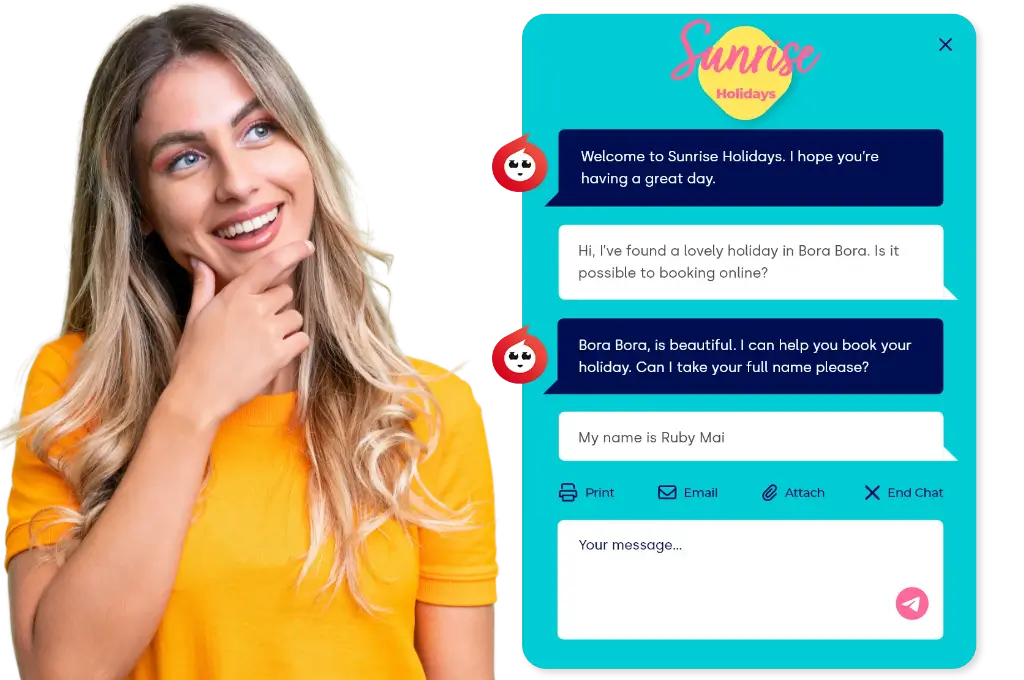
Travel organisations are under sustained pressure to deliver fast, consistent, and scalable customer service across multiple channels. Customer expectations are increasingly digital-first, with travellers expecting instant answers before, during, and after their journey.
An AI agent for travel provides a practical way to meet these expectations by automating routine enquiries, supporting customers during peak demand, and working alongside human advisors to maintain service quality.
For travel marketing and customer success directors, AI agents provide a way to protect brand reputation during critical moments and deliver experiences that build trust. For IT and digital transformation officers, they offer a scalable, governed approach to modernising customer service without destabilising existing systems.
This page sets out the most important considerations when evaluating an AI agent for travel customer service. It is intended as a practical framework for decision-makers who need clarity, realism and long-term value.

The Complexity of Travel Customer Intent?
Travel customers rarely contact organisations with straightforward questions. Enquiries often combine multiple issues, evolve during the conversation and are shaped by stress, urgency or uncertainty. An effective AI Agent for travel must be able to handle this complexity without forcing customers into rigid interaction paths.
A customer might begin by asking about a delayed departure, then move on to compensation, onward travel, accommodation or refund eligibility. Another may enquire about accessibility requirements while also seeking reassurance around booking conditions. These are everyday realities in travel customer service.
Basic chatbots struggle in these scenarios because they rely on narrow intent definitions and scripted flows. When conversations deviate from expected patterns, they fail quickly, leading to escalation, repetition and frustration.
A more capable AI agent is built around natural language understanding that reflects how customers actually communicate. It should recognise intent even when questions are incomplete, phrased emotionally or include sector-specific language. It must also maintain context across multiple turns, adjusting responses as new information emerges.
Click4Assistance AI agents can be trained using real customer service interactions, allowing travel organisations to automate meaningful conversations rather than simply deflecting demand.
AI Agents Working Alongside Human Service Teams
In travel, full automation is rarely realistic. There will always be situations that require empathy, judgement or specialist knowledge. The value of an AI agent for customer service lies in how effectively it supports and collaborates with human teams.
A blended service model allows the AI agent to handle high-volume, low-complexity interactions such as local information, standard policy queries or routine amendments. When conversations become complex, sensitive or exceptional, the AI agent should escalate seamlessly to a live advisor.
Crucially, escalation must include full conversational context. Customers should never be asked to repeat information they have already provided. This continuity is essential to maintaining trust and reducing frustration.
From an operational perspective, organisations retain control. Rules can be defined around escalation thresholds, working hours, and risk scenarios. This is particularly important in travel, where tolerance for automation may vary depending on the nature of the issue.
For staff, this approach reduces repetitive workload and allows greater focus on problem-solving and customer care. For customers, it delivers faster responses without sacrificing quality. For leadership teams, it supports more resilient service models during periods of high demand.
Click4Assistance supports AI-first approaches with intelligent human handover, enabling travel organisations to balance efficiency with care and accountability.
Key Use Cases of AI Agents in Travel
AI agents for travel support a wide range of customer service and operational use cases across the travel journey.
- Booking enquiries and reservation assistance
- Flight delays, cancellations, and disruption updates
- Refund, compensation, and policy queries
- Destination and travel information support
- Accessibility and special assistance requests
- Pre-travel planning and itinerary guidance
- Post-travel feedback and complaint handling
The Entire Travel Customer Lifecycle
Customer service in travel extends far beyond the moment of booking. Interactions occur across the entire journey, from early research and planning through to post-travel feedback and future intent. An effective AI Agent for travel must support this full lifecycle.
Before booking, customers seek information and reassurance. They ask about destinations, availability, pricing, accessibility, policies and flexibility. During travel, they need timely support when plans change, often under pressure. After travel, they may raise complaints, or explore future bookings.
A recent Guardian report highlights the increasing adoption of artificial intelligence by travellers, particularly younger generations, to inspire and plan their holidays. According to research from the UK travel body Abta, almost one in five young adults (18%) aged 25–34 now turn to AI tools such as ChatGPT when designing their trips abroad. This represents a doubling compared with the previous year, reflecting a clear trend towards digital-first planning.
Abta expects the role of AI to expand. Nearly two in five Britons say they would feel confident allowing an AI assistant to book their travel. The study also noted that holiday participation in the UK is returning to pre-pandemic levels, with 87% of respondents taking a domestic or international trip last year.
The report emphasizes that AI adoption aligns with wider consumer behaviour trends across sectors, while underlining the continued value of human expertise. Abta’s chief executive, Mark Tanzer, explains that “the challenge for travel companies is to harness AI’s potential to support business operations without losing the personal touch and guidance provided by travel agents and tour operators.”
Beyond planning logistics, younger travellers are placing higher importance on wellbeing and sustainability. The study found that 90% of 25–34-year-olds consider holidays important for mental health, and they are more likely than older travellers to select companies or destinations based on environmental commitments. Industry leaders, such as Jet2 CEO Steve Heapy, caution that cost considerations still influence decisions, but recognise that younger holidaymakers are increasingly responsible and mindful of healthier lifestyles.
The article also touches on evolving tourism strategies in Europe, such as Spain promoting longer, slower stays rather than mass beach tourism, illustrating how travel behaviour and expectations are changing.
Overall, the Guardian’s findings reinforce that AI is becoming a practical and widely accepted tool for holiday planning, particularly for inspiration and initial itinerary design, while human expertise remains crucial for verification, detailed planning, and personalised advice.
Many organisations rely on separate systems or teams for each stage, leading to fragmented experiences. Customers are treated as new at every interaction, even when they have a long relationship with the brand.
An AI agent that operates across channels and stages can provide continuity. It can maintain context within conversations supporting a more coherent customer experience and reducing avoidable follow-up contact. For marketing teams, this supports consistent messaging and brand alignment. For customer success teams, it improves resolution quality and reduces repeat enquiries.
Click4Assistance enables AI agents to operate across digital channels, supporting customers throughout the travel journey rather than at isolated touchpoints.
Demand Peaks, Seasonality and Disruption
Travel demand is inherently volatile. Seasonal peaks, promotional campaigns and external events can cause sudden surges in customer contact. Traditional staffing models struggle to cope with this variability without significant cost.
An AI Agent for travel provides elasticity. It can handle large volumes of simultaneous interactions without increased wait times or degradation in service quality. This is particularly valuable during disruption, when customers need immediate information and guidance.
During events such as cancellations or delays, AI agents can provide consistent updates, explain next steps and signpost available options. This reduces pressure on frontline teams and helps maintain service levels when demand is highest.
However, scalability must be managed carefully. AI agents need access to up-to-date information and clear rules around what they can communicate. Transparency is essential when situations are evolving.
For IT and digital leaders, scalability also includes resilience. Cloud-based deployment, monitoring and performance management ensure systems remain available during critical periods.
Click4Assistance AI agent ARTI is designed for high-volume environments, helping travel organisations remain responsive when customers need them most.
Integration with CRM and Travel Technology Systems
An AI agent for travel delivers its greatest value when it can draw on the systems that already underpin customer service. Integration allows the agent to move beyond answering general questions and instead support more personalised, context-aware interactions.
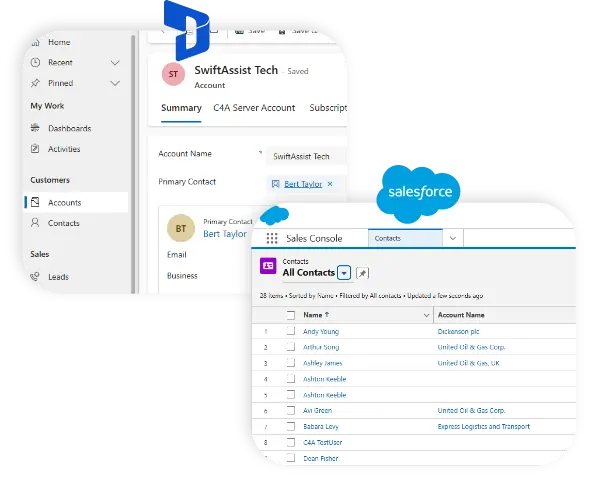
Connecting an AI agent to a CRM platform, for example, enables it to reference relevant customer information, understand recent interactions and support more consistent service across channels. This helps create smoother conversations and improves the overall customer experience.
Travel organisations often operate within complex technology environments, combining established platforms with bespoke or legacy systems for bookings, schedules and customer data. A flexible approach to integration is therefore essential. AI agents should be able to work with standard enterprise systems while also supporting tailored connections where needed.
For IT teams, this approach protects existing investments and reduces implementation risk. For customer service teams, it supports faster resolution and greater accuracy. For customers, it results in more relevant, helpful responses that feel aligned with their situation.
Click4Assistance ARTI supports CRM integrations and bespoke system connections, enabling AI agents to operate effectively within the realities of modern travel technology.
How is Responsible AI Use Managed?
Trust is central to customer service, particularly in travel where issues can be stressful and time-sensitive. An AI Agent for travel must operate within clear governance frameworks that reflect organisational values and risk appetite.
A recent BBC article explored how generative AI tools are increasingly being used to plan holidays, highlighting both their potential and current limitations. The piece followed travellers such as Jason Brown, who used ChatGPT to organise a 10 day itinerary to Amsterdam and Ireland. The AI provided detailed schedules, including suggested activities for mornings, afternoons, and evenings, and offered highlights such as Dublin’s Trinity College and Amsterdam’s Anne Frank Museum. Brown described the experience as “fantastic,” noting that AI gave him a reliable skeleton for the trip, which he supplemented with personal recommendations from friends.
The article also noted that AI travel planning is growing in popularity, with about one in ten Britons having used AI for holiday planning, and one in five likely to do so in the future.
However, the BBC highlighted that AI still has significant limitations. A survey found that 38% of users received generic responses, 37% reported missing information, and 30% encountered incorrect information. Experts emphasised that AI is only as reliable as the data it is trained on.
The BBC article underscores a key lesson for travel organisations: AI can provide inspiration and efficiency, but human oversight and verification remain essential to ensure practical, safe, and accurate customer experiences.
Organisations should be able to define what the AI agent can and cannot do, review conversations and refine responses over time. Visibility into AI behaviour is essential for accountability and continuous improvement.
This is especially important for regulated or sensitive scenarios such as refunds, compensation and complaints. AI agents should support compliance by following defined rules and escalating appropriately when limits are reached.
For senior stakeholders, governance reduces reputational and operational risk. For service teams, it ensures AI is perceived as a supportive tool rather than an uncontrolled system.
Click4Assistance’s ARTI provides configuration, monitoring and reporting capabilities that allow organisations to maintain oversight while continuously improving AI performance.
Data Protection and Security
Travel organisations handle significant volumes of personal and transactional data. Any AI agent for travel must operate within established data protection and security requirements.
This includes GDPR compliance, secure data handling and appropriate access controls. Organisations should have clarity over where data is stored, how it is processed and who has access.
For IT and digital transformation officers, this involves understanding hosting models, authentication mechanisms and audit capabilities. While security does not need to dominate the customer conversation, it must be robust and demonstrable behind the scenes.
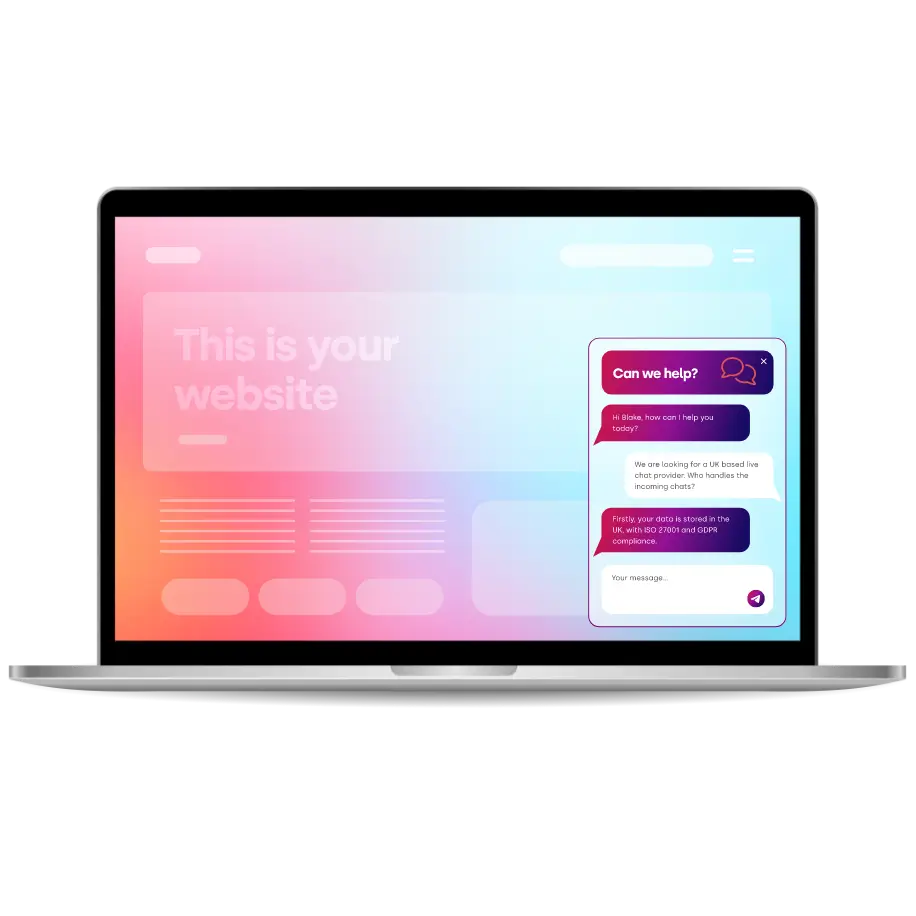
Click4Assistance treats security as a foundational requirement, and all data is stored in the UK, enabling travel organisations to deploy ARTI with confidence.
Service Quality and Business Impact
AI adoption should be driven by clear outcomes, making measurement a critical part of any AI Agent for travel strategy. Without a robust approach to tracking performance, it becomes difficult to justify investment, demonstrate value to stakeholders or identify where optimisation is needed.
Operational metrics provide an essential starting point. Measures such as contact deflection, response times, resolution rates and customer satisfaction help organisations understand how effectively the AI agent is supporting day-to-day service delivery. These indicators also provide insight into workload reduction for frontline teams and the overall efficiency of the service model.
For marketing teams, additional metrics may be relevant, particularly where AI supports pre-booking enquiries or destination research. Engagement levels, assisted conversions and channel usage can all help assess how AI contributes to customer acquisition and early-stage decision-making.
Beyond these immediate measures, AI-driven interactions generate rich insight into customer needs, behaviours and recurring pain points. Patterns emerging from conversations can highlight gaps in information, areas of confusion or opportunities to improve policies and content. Over time, this insight supports better service design and more informed decision-making across the organisation.
Click4Assistance provides reporting and analytics that help travel organisations understand how AI is performing in practice and where it is delivering value across both customer service and marketing objectives, supporting ongoing refinement and long-term success.
Experience and Credibility in AI
Travel is a particularly demanding environment for AI, where customer service is often delivered under pressure and expectations are high. Interactions are frequently time-sensitive, emotionally charged and influenced by factors outside an organisation’s direct control, such as weather, operational disruption or regulatory change. In this context, sector experience matters.
Providers working in travel must understand the practical realities of day-to-day operations, from fluctuating demand and seasonal peaks to the challenges faced by frontline teams during periods of disruption. They also need a clear appreciation of travel customers’ expectations, particularly the need for fast, accurate information and reassurance when plans are affected.
Click4Assistance has worked with organisations across the travel sector, including YHA, Orbital Travel and Cruise & Maritime, delivering digital customer service solutions aligned with real operational requirements. This experience shapes how AI agents for travel are designed, deployed and governed, ensuring they support service teams rather than adding complexity or risk.
For decision-makers, proven sector experience reduces uncertainty and accelerates time to value. It helps ensure that AI capabilities are grounded in practical service delivery, informed by real customer interactions and operational constraints, rather than built around theoretical or generic use cases.
See how Click4Assistance can transform your travel company.Future Proofing an AI Agent for Travel
An AI Agent for travel should be viewed as a long-term capability rather than a short-term fix. Travel organisations operate in an environment that is constantly evolving, shaped by changing customer expectations, emerging technologies and regulatory requirements. Any AI solution must therefore be able to adapt and grow over time.
This means more than simply adding automation. A future-ready platform should support the gradual expansion of use cases, the introduction of new digital channels and the ongoing refinement of AI behaviour as organisations build confidence and maturity. As service strategies evolve, AI should be able to keep pace without requiring fundamental redesign or replacement.
Equally important is alignment with wider digital service strategies. AI agents deliver the greatest value when they operate as part of an integrated approach to customer service, working alongside people, processes and existing systems rather than in isolation. This helps ensure consistency, governance and long-term sustainability.
Click4Assistance’s ARTI provides a flexible platform designed with this evolution in mind. With over 21 years’ experience in digital customer service, Click4Assistance develops its software in close partnership with customers, using real-world feedback to guide ongoing improvements. ARTI is continually updated to reflect changing needs, allowing travel organisations to innovate confidently while maintaining operational stability.
Frequently Asked Questions (FAQs)
Modern travel customer service is complex, time-sensitive and highly demanding. AI agents, when deployed thoughtfully, can support teams, improve responsiveness and enhance customer experiences across the travel journey.
Here are the key questions organisations ask when considering AI for travel customer service.
- Can AI Agents Work Alongside Human Service Teams?
AI agents provide instant answers to common questions, guide residents to the right services, and reduce waiting times, improving access and clarity.
- Can AI Support the Entire Travel Customer Lifecycle?
AI agents for travel can assist from pre-booking research to in-trip support and post-travel follow-up, providing continuity across channels and touchpoints.
- Can AI Handle Demand Peaks, Seasonality, and Disruption?
Yes. AI scales to manage high volumes, maintain response quality, and support customers during busy periods or unexpected disruptions.
- Can AI Integrate with CRM and Travel Technology Systems?
Integration enables AI agents for travel to deliver personalised, context-aware responses and work effectively within complex travel technology environments.
- How Is Responsible AI Use Managed?
Governance frameworks, monitoring tools, and escalation rules ensure AI operates safely, transparently, and in line with organisational standards.
A Measured, Practical Approach to AI Agents in Travel
AI agents are no longer experimental tools. They are a practical component of modern travel customer service strategies. When implemented thoughtfully, they improve responsiveness, support staff and help organisations deliver consistent experiences under pressure.
By focusing on intent, integration, governance and collaboration with human teams, organisations can adopt an AI agent for travel in a way that delivers long-term value without compromising trust.
Book a demo to see how Click4Assistance can support your travel customer service strategy with an AI agent designed for real-world complexity.
Thousands Trust Us. Will You?
From live chat to AI-powered chatbots and social integrations, Click4Assistance powers real-time engagement - fully UK hosted and trusted across industries.