











AI Agent for Customer Service and Support
Deliver faster, more accessible customer service with an AI Agent designed to answer enquiries, provide information and assist customers around the clock.

Customers expect fast and relevant responses to their questions. If they are struggling to understand a product, or have questions about a service then long wait times can cause frustration and put extra pressure on your customer service team.
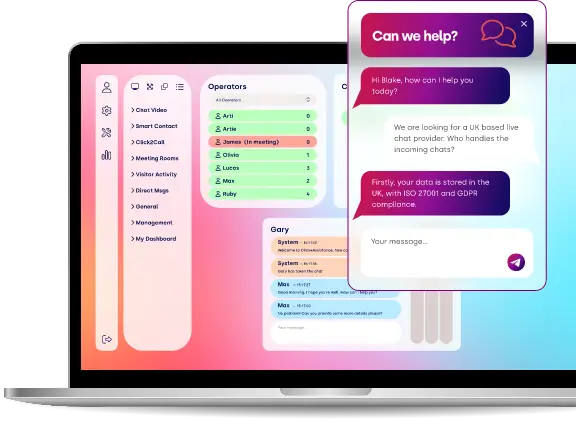
An AI Agent can support customer service teams by answering common enquiries through natural conversations. Using approved business information, it can provide relevant guidance and help customers find answers without waiting for a member of staff.
With Click4Assistance, Arti can be configured using your organisation's website content, FAQs, support documentation and other approved knowledge sources. This allows businesses to respond to frequently asked questions while providing appropriate routes to human assistance when required.
We will outline how an AI agent works in customer services, what the benefits are of using one, what to look out for and how you can implement AI powered customer support.
Table of Contents
- What Is an AI Agent for Customer Service and Support?
- Benefits of an AI Agent for Customer Service and Support
- Key Features to Look for in an AI Customer Service Agent
- Use Cases for AI Agents in Customer Service and Support
- How Does an AI Agent Work for Customer Service and Support?
- AI Agent vs Rule-Based Chatbot for Customer Support
- Measuring the Benefits of AI in Customer Service
- Frequently Asked Questions (FAQs)
- Improve Customer Service and Support with an AI Agent
What Is an AI Agent for Customer Service and Support?
An AI Agent for customer service uses artificial intelligence to understand customer questions and generate relevant responses based on approved business information. This allows customers to ask questions naturally and receive guidance without having to navigate predefined menus.
For customer service teams, this means common enquiries can be answered automatically using relevant business information, helping reduce repetitive workloads and making support more accessible.
This could be to explain how delivery works, hours of operation, product information or advice on how to fix a common issue. The AI Agent can provide customers with advice based on your approved information.
AI Agents can understand questions asked in everyday language, which is different from older chatbots that follow strict rules. However, how good their answers are really comes down to the information they have access to.
How can an AI Agent Help with customer service?
- Answer common customer questions
- Provide out of hours information
- Provide product, service and process guidance
- Provide troubleshooting guidance based on approved documentation
- Help reduce manual and repetitive questions
- Direct customers to human support if required
By providing easy access to information, an AI Agent can help your Customer Service team. This means your employees can focus on queries that require more personal attention, specific knowledge or further research.
Benefits of an AI Agent for Customer Service and Support
Implementing an AI Agent in your customer services can help to create a more efficient process, provide easy access to support information and reduce repetitive tasks.
- 24/7 Customer Support
An AI agent can provide information to the customer at any time of the day, including evenings, weekends and bank holidays. This can allow businesses to respond to common questions outside of standard working hours.
- Faster Responses to Common Questions
Customers often have questions about opening times, policies, processes and product information. An AI Agent can provide helpful answers from approved knowledge sources.
- Reduces repetitive support tasks
Common questions can be answered by an AI Agent which can reduce repetitive questions. This means your Customer Service team can spend more time on complex or sensitive issues.
- Consistent Business Information
The AI agent will provide information based on the business knowledge it has been set up with. Keeping knowledge sources up to date can help to provide consistent information.
- Support during busy times
During busy times such as seasonal peaks, changes to services or marketing campaigns, there can be an increase in customer queries. An AI Agent can help with multiple conversations.
- Improved human support team usage
An AI Agent will work best when used alongside a human support team. Enquiries requiring judgement, empathy or specialist knowledge can be passed to the correct team.
Key Features to Look for in an AI Customer Service Agent
When looking at implementing an AI Agent for customer service, there are some key features to consider.
- Natural Language Understanding
This will allow customers to ask questions in plain language.
- Approved Customer Support Information
Your AI Agent should be able to use your FAQs, support documentation, help articles, policies, and other approved information to give customers answers that are relevant to your products, services and support.
- Help With Common Queries
Using an AI Agent can help reduce the number of repetitive queries that your customer service team will need to answer. It can provide answers to common customer queries like how to access a service, how to understand a policy or how to follow a process.
- Human Support for Queries
Not all queries can be answered using an AI. So think about how you will allow your customers to have access to a member of your support team if they need further investigation, specialist knowledge or human support.
- Tailor how your AI interacts
Your business should be able to tailor your AI Agent so that it can interact with customers in the way that you want. It can be tailored to only have access to certain information and avoid certain topics. Arti can be tailored to give instructions specific to your organisation.
- Insights from reports
By looking at conversations and reports you can identify common customer queries, areas where your support information could be improved and areas to improve the overall customer experience.
- Security
When adding an AI to your customer service process you should consider your GDPR requirements, security measures by the provider and how customer data will be handled.
- Integration
Think about how your AI Agent can integrate with your current communication channels and support processes. If there are suitable integrations available and set up you may be able to add extra functions using your business systems or secure APIs.
Manage Customer Service with Your Own AI Agent
Meet Arti, the Click4Assistance AI Agent. Use approved website content, FAQs and support documentation to help customers find relevant information and reduce repetitive enquiries.
Use Cases for AI Agents in Customer Service and Support
AI Agents can support customer service teams across different industries by responding to commonly asked questions and helping customers access relevant information. Below are some practical examples of how organisations can use AI-powered customer assistance.
E-commerce and Retail
For online shops, AI is great for sorting out the basics: delivery times, return policies, or general product info. Instead of hunting through a FAQ page, a customer can just ask, "How do I return this?" and get a direct answer based on the store's rules.
Software and Tech Support
Tech companies use AI to help users get up and running. Whether it's a setup guide or a troubleshooting step, the AI can point the way. For instance, if someone can't log in, the AI can suggest a quick fix from a support article before passing them over to a human technician if things are still broken.
Healthcare Enquiries
Medical offices can use AI to handle the simple stuff—like opening hours, what services they offer, or how to book an appointment. If a patient needs to know how to reach a specific department, the AI has them covered. (Of course, anything actually clinical still goes to a professional doctor or nurse).
Housing Association Support
Housing associations often deal with the same few questions. AI agents can explain how to report a repair, how to apply for housing, or other tenant basics. A tenant could ask, "How do I report a leaky tap?" and get the exact steps they need to follow.
Financial Services and Insurance
In finance or insurance, AI is a huge help for general queries, like what documents are needed to file a claim. Since this industry is heavily regulated, the AI handles the general info, while the "heavy" stuff—like specific account details—is handed off to a specialist.
Education and University Support
Universities use AI to help students navigate enrolment and administrative processes. If a student needs to find their support team or figure out a registration process, the AI can give them the answer in seconds.
Across these industries, AI Agents can help organisations provide information about common customer enquiries while allowing human support teams to concentrate on more complex or sensitive issues.
How Does an AI Agent Work for Customer Service and Support?
An AI Agent uses artificial intelligence and configured business knowledge to interpret customer questions and generate relevant responses. With Click4Assistance, Arti can be configured to provide assistance based on your organisation's approved information and guidance.
Understanding the Question
Customers will ask a question about anything from returns, finding services, or general technical issues. The AI Agent will understand what information the customer needs.
Using Approved Support Information
The AI agent will look at the right information from your configured sources. This may be FAQs, website information, product guides, support documents, and published processes. The quality of information will affect the answer.
Providing a Response
The AI Agent will provide an answer using the available business information. This may explain a process, guide, or help your customer understand what to do next.
Customers Need Additional Help
If the enquiry needs further investigation, you can set up the right answer or guidance to send them to your Customer Service team.
Reviewing your Support Information
You can review the conversations with customers and any reports to see which frequently asked questions there are, which haven’t been answered and where improvements can be made to your sources of information. Updating your approved information and AI will help improve your answers.
This means you can provide customers with the information they need to get support 24/7 while also involving your employees with any queries that need their knowledge.
AI Agent vs Rule-Based Chatbot for Customer Support
Both rule-based chatbots and AI Agents can help support your customers.
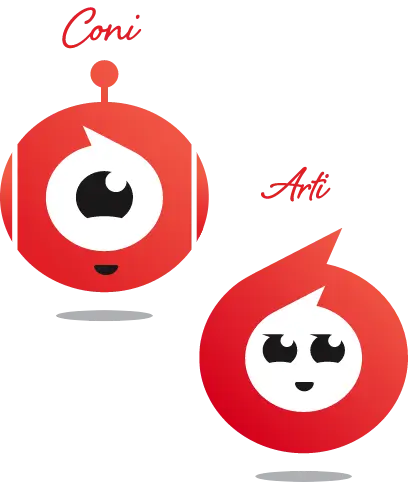
Rule-Based chatbots (Coni) can be used to guide customers by offering them set options, questions and data input fields. AI Agents (Arti) can be used to allow customers to ask questions and receive answers in a natural way, using the business knowledge you have set up.
| Feature | Rule-Based Chatbot (Coni) | AI Agent (Arti) |
|---|---|---|
| Interact with Customers | Predefined conversation flow | Natural conversation |
| Customer Inputs | Set options and inputs | Open text questions |
| Answers | Answers based on rules | Answers generated from approved knowledge |
| Best for | Structured support flow | Questions that require explanation |
| Setup | Scripts and options | Knowledge and instructions |
If you want to capture structured information or need to guide customers through a predictable process, then a rule-based Chatbot could be very helpful. If you need to allow customers to ask a range of questions and give detailed explanations, then an AI Agent would be more suitable.
Businesses can choose which method will best fit their customer support needs.
Measuring the Benefits of AI in Customer Service
When implementing an AI Agent for your Customer Service, you should consider what impact it is having on your overall Customer Service goals. Being able to measure how well the AI is performing will enable you to identify if it is helping increase efficiency, assist your customers and reduce any repetitive tasks.
Response Times
Monitor how quickly customers receive a response from your AI Agent. The AI Agents can provide instant automated responses which can help reduce waiting times for common questions.
Repeat Enquiries
See how many questions your customers are asking that can be answered using your approved knowledge bases. This can help you identify what areas of your service would benefit most from automated support.
Satisfaction
If you have access to customer feedback or satisfaction surveys, you can identify if they are finding the AI-powered support helpful in providing them with useful information.
Reduced Workload
Monitor whether customer service staff are spending less time answering repetitive questions and more time on enquiries requiring specialist attention.
Unanswered Questions
Look at the conversations that the AI Agent was unable to answer. This can help you identify any missing information in your support, confusing guidance or areas to improve your documentation.
Cost Efficiency
Consider how much you are spending on your AI Agent and whether it is providing any benefits such as reducing repeat work, increasing availability and improving the efficiency of your Customer Service. How much of an impact this has financially will depend on how many questions you are receiving, how it is set up and what your support needs are.
By identifying key performance indicators, businesses can make informed decisions on how to improve their Customer Service.
Frequently Asked Questions (FAQs)
- What is an AI Agent for Customer Service?
This is a chatbot which has been built with AI systems to help provide answers to customer questions using your business's approved information. This provides an efficient way to answer common customer queries and gives your customers information out of hours.
- How can an AI Agent improve our Customer Support?
An AI Agent can improve customer support by providing faster answers to common enquiries, making support information easier to access and reducing repetitive tasks for customer service teams.
- Can we offer 24/7 customer support with an AI Agent?
Yes, an AI Agent can provide automated customer support at any time of the day, including evenings, weekends and bank holidays, meaning your customers can get information from your business.
- What kind of questions can an AI Agent answer?
As long as the information is available in your approved information sources the AI Agent can answer questions regarding products, services, policies, processes and troubleshooting. The AI Agent will provide answers based on the information and guidance you provide.
- How does the AI Agent know what to tell customers?
Based on the information you have set up for your business, such as your website, FAQs, help articles and support information, the AI Agent will provide relevant answers. We would recommend regularly checking and updating your information sources to ensure the quality of the information is high.
- Is AI Customer Service suitable for businesses in the UK?
AI Customer Service can be a great solution for various sized businesses across different sectors in the UK. We would recommend considering your support requirements, data protection and security requirements and how you will use the AI agent to complement your existing customer communication.
Improve Customer Service and Support with an AI Agent
An AI Agent for customer service can help businesses provide timely information, respond to frequently asked questions and make support information available outside normal operating hours.
Click4Assistance can build an AI agent which can provide your customers with access to information. It uses natural language and generates responses using approved business information.
Having an AI in place means you will get the most out of your support resources, whilst assisting your customers to find the answers they need. This works best when it is in place alongside your Customer Service Team.
Book a free bespoke demo with Click4Assistance to see how Arti can help with your customer support.
Thousands Trust Us. Will You?
From live chat to AI-powered chatbots and social integrations, Click4Assistance powers real-time engagement - fully UK hosted and trusted across industries.