














Why Voice-Enabled Chat Is a Game Changer





At Click4Assistance, our journey has taken another important step forward with the introduction of ARTI Voice. On the surface, that might sound like a small enhancement. In reality, it has far reaching implications for usability, accessibility, and the overall customer experience.
Digital customer service has come a long way in a relatively short space of time. From shop window websites to static contact forms to live chat widgets, expanding into WhatsApp and Facebook Messenger integration, and then into the world of automation and AI agent for website, businesses now have more ways than ever to support their customers quickly and effectively.
Building on live chat, CONI (logic-based chatbot), and ARTI, a ChatGPT-powered chatbot, ARTI Voice introduces a tool that feels both simple and transformative. It allows users to speak instead of type, and to hear responses instead of reading them.
Meeting People Where They Are
Digital communication has traditionally been built around typing and reading, which works well for many users. At the same time, there is a growing opportunity to make these interactions even more inclusive and intuitive for everyone. Voice opens the door to a more natural and flexible way of communicating, transforming how people can engage online.
With ARTI Voice, users can simply tap a microphone button and speak naturally. Their speech is converted into text within the chat window, allowing them to interact with either a human agent, CONI, or ARTI without needing to type a single word.
This matters because it reflects how people actually communicate in their everyday lives. We speak far more than we type so by bringing that natural behaviour into live chat, businesses can create interactions that feel more natural and effortless for their customers.
A Major Step Forward for Accessibility
Accessibility is often discussed, but not always fully addressed. ARTI Voice represents a meaningful step in the right direction.
There are several groups who benefit immediately from voice-enabled chat:
Users with visual impairments
For users with limited vision, typing and reading can sometimes be slower or less comfortable, particularly in fast-moving chat environments. While screen readers provide valuable support, they do not always offer the same fluid, real-time experience that live conversations demand. Voice interaction enhances this by allowing users to simply speak their query and listen to responses, creating a more natural, responsive, and seamless experience from start to finish.
Users with motor difficulties
For individuals with limited fine motor control, using a keyboard or typing on a mobile device can take extra time and effort. Voice input offers a more comfortable and empowering alternative, allowing users to communicate quickly and confidently without relying on precise physical interaction.
Users with dyslexia or literacy challenges
Not everyone feels comfortable with written communication, and that is completely natural. Voice interaction provides a more relaxed and accessible alternative, enabling users to express themselves clearly and confidently without the added pressure of spelling, grammar, or reading complexity.
Users in temporary situations
Accessibility is not limited to permanent conditions; it also supports people in everyday situations. Whether someone is holding a child, carrying shopping, or managing a temporary injury, typing may not always be convenient. Voice interaction brings added flexibility, making it easier to stay connected and get support in those real-life moments.
By integrating voice directly into the live chat widget interface, Click4Assistance ensures accessibility is designed into the experience itself, not treated as an afterthought.
Reducing Friction in Customer Journeys
Every step in a customer journey plays a part in shaping the overall experience. Even small actions, like typing out a message, can add time and effort, especially when someone is trying to explain a more complex issue. In fact, one of the criticisms often levelled at live chat or even the best ai chatbots for business, is that longer, more complicated questions can be tedious to type out. Users may feel frustrated trying to condense their concerns into short messages or worry about being misunderstood if they can’t fully explain the situation.
Voice input changes this dynamic entirely. Instead of stopping to type, users can speak naturally, allowing them to describe their situation in full, with all the detail it deserves. This leads to fewer messages, as more context is shared upfront, and conversations flow in a way that feels much closer to a real dialogue than a series of short exchanges. Even those who have been critical of chat systems may find that voice brings a whole new level of ease and clarity, making it possible to handle complex issues efficiently and without frustration.
The impact of this is noticeable on both sides. For businesses, it can mean quicker resolutions, more efficient conversations, and better use of your teams’ time. Agents can understand issues more fully from the start, reducing repeated explanations and follow-up messages. For customers, it creates an experience that feels straightforward, natural, and effortless to engage with. When something feels simple and intuitive, people are far more likely to follow through and complete what they set out to do, and even critics of traditional chat may find themselves pleasantly surprised by how effective and satisfying voice-enabled interaction can be.

Enhancing Multichannel Support
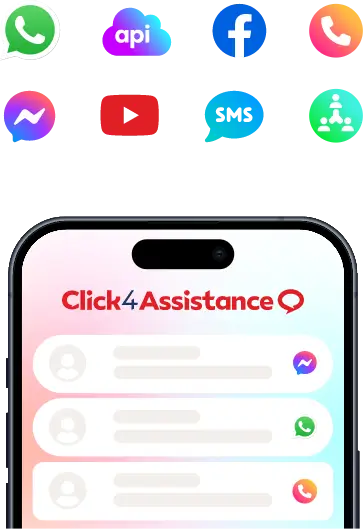
One of the strengths of the Click4Assistance platform is how its components work together. Live chat, CONI, and ARTI don’t have to be standalone tools. They are designed to operate in conjunction with each other.
ARTI Voice fits neatly into this ecosystem.
A user might start by speaking to CONI, which handles a straightforward query using predefined logic. If the conversation becomes more complex, ARTI can step in to provide more flexible, AI-driven responses. If needed, a human agent can take over.
Throughout that journey, the user can continue speaking and listening using ARTI voice, rather than switching between different modes of interaction.
Supporting a More Inclusive Digital Strategy
Organisations are increasingly aware of their responsibility to provide inclusive digital services. This is particularly true in sectors like local government, healthcare, and education.
Voice-enabled chat aligns closely with that goal.
Rather than expecting users to adapt to technology, it allows technology to adapt to users. It acknowledges that people have different needs, preferences, and abilities. For organisations working towards standards such as WCAG compliance, features like ARTI Voice can play a valuable role in demonstrating a commitment to accessibility.
However, beyond compliance, there is a more important point. Inclusive design often leads to better experiences for everyone.
Improving Engagement and Satisfaction
Customer success loses its way when it focusses solely on solving problems. For many customers the thing they remember most is how those interactions feel.
Voice adds a human dimension to digital communication. Even when the response is generated by ARTI, the ability to hear it spoken aloud can make the interaction feel more personal.
This can lead to:
- Higher engagement rates
- Longer, more meaningful interactions
- Improved customer satisfaction
People are more likely to stay engaged when an interaction feels effortless and natural.
Bridging the Gap Between Automation and Human Support
Automation has brought significant benefits to customer service, from faster response times to round-the-clock support and the ability to handle high volumes of enquiries efficiently. It allows businesses to be more responsive, reduce waiting times, and provide consistent answers to common questions. However, one challenge is that purely automated interactions can sometimes feel impersonal or transactional. Without the human touch, conversations may lack warmth, nuance, or the feeling of being truly understood.
Voice-enabled chat offers a powerful way to bridge that gap. By allowing users to speak naturally and hear responses, interactions start to feel more like a conversation than a series of typed instructions. Even when the response comes from a chatbot like ARTI or CONI, the ability to hear a human-like voice adds personality, clarity, and a sense of connection.
This combination of automation and voice creates the best of both worlds. Businesses still benefit from efficiency and scalability, while customers enjoy interactions that feel more personal, approachable, and human. Over time, this can foster stronger trust and loyalty, showing that automated support doesn’t have to sacrifice empathy or quality.
Future-Proofing Customer Communication
Technology, along with user expectations continue to evolve.
Voice is becoming an increasingly important part of how people interact with technology, from virtual assistants to smart devices. Integrating voice into live chat examples is a natural extension of that trend.
By adopting features like ARTI Voice, organisations are positioning themselves for the future.
Simplicity That Makes a Difference
Perhaps the most fascinating aspect of ARTI Voice is its simplicity. Users do not need to download anything, or learn a new system, they simply click a button and speak. That simplicity is what makes the feature so powerful by lowering the barrier to entry and ensures that the benefits are accessible to as many people as possible.
ARTI Voice is more than a new feature. It represents a shift in how we think about digital communication.
By combining live chat, CONI, and ARTI with voice capabilities, Click4Assistance has created a more flexible, inclusive, and human-centred experience. It recognises that not everyone wants to type, not everyone finds it easy, and not everyone should have to.
In doing so, it opens the door to better accessibility, smoother customer journeys, and more meaningful interactions.