














Compliance Is Changing: Live Chat for Housing Has Never Mattered More



Good communication has always been important to well-run housing providers, but it is now becoming something much more tangible. It forms part of the evidence that organisations are listening to residents, responding appropriately and managing their responsibilities effectively. The challenge is ensuring that every interaction contributes to building trust rather than creating uncertainty.
For many years, compliance within social housing has largely been measured by what organisations did.
- Were properties maintained to the required standard?
- Were statutory inspections completed on time
- Were complaints investigated appropriately?
- Did landlords meet their legal obligations?
Those questions are still just as important today, but the expectations placed on housing providers have broadened considerably, as now regulators are also interested in how organisations engage with the people who live in their homes. It is no longer enough to have robust policies, well-managed repairs programmes or comprehensive safety procedures if residents are left feeling uninformed, ignored or uncertain about what is happening.
That change has been gathering momentum for some time, but recent legislation has accelerated it. The Social Housing (Regulation) Act 2023 represents one of the most significant reforms to the sector in decades, strengthening the powers of the Regulator of Social Housing and placing a far greater emphasis on transparency, accountability and the resident experience. While much of the discussion has understandably focused on inspections, consumer standards and building safety, the theme of communication runs through almost every aspect of the reforms.
When issues arise, whether they involve repairs, safety concerns, complaints or planned maintenance, if action was taken is not the only consideration. Housing providers increasingly need to demonstrate that residents were kept informed throughout the process and that information was provided in a clear, timely and accessible way.
For many organisations, this is about recognising that communication deserves the same level of planning and governance as any other operational function. Most housing associations and local authorities already invest significant time and effort in supporting residents, often under considerable financial pressure and with competing priorities.
When Good Service is not Enough
Anyone who has worked in customer services might recognise the pattern of dissatisfaction. A repair may have been logged correctly, an inspection arranged and a contractor instructed, yet the resident still feels frustrated because they have no idea when somebody is coming or what happens next. A planned programme of fire safety works may be progressing exactly as scheduled, but without regular updates residents begin to assume that nothing is happening. In many cases, it is not the service itself that has failed, it is the communication surrounding it.
That is an important distinction because it changes where organisations focus their attention. Improving resident satisfaction is not always about delivering more services or employing larger teams. Sometimes it is about making existing services more visible by ensuring residents understand what is happening, why decisions have been made and what they can reasonably expect next. Clear communication removes uncertainty, manages expectations and reassures people that progress is being made, even when the final outcome may still be some weeks away.
The Resident Experience Starts With Being Heard
The emphasis on resident engagement should not come as a surprise. The Social Housing White Paper, The Charter for Social Housing Residents, published following the Grenfell Tower tragedy, set out a clear ambition to rebalance the relationship between landlords and residents. It challenged housing providers to listen more carefully, communicate more openly and place residents at the centre of decision making. Many organisations embraced those principles long before they became legislation, investing in resident engagement programmes, digital services and new ways of gathering feedback. The Social Housing (Regulation) Act builds on those foundations by giving regulators broader oversight of how landlords deliver those commitments in practice.
Historically, compliance has often been seen as policies, procedures and technical standards. Those remain essential, but today's regulatory environment places equal value on visibility and accountability. It is not enough for an organisation to know that it is doing the right thing. Residents should be able to see that it is happening, understand what is taking place and feel confident that their concerns are being heard.
This is particularly relevant at a time when housing providers are managing increasingly complex demands. Alongside routine repairs and tenancy management, organisations are responding to evolving building safety requirements, damp and mould investigations, energy efficiency programmes, estate improvements and growing expectations around resident engagement. Each of these areas generates communication, often involving multiple departments, contractors and external partners. From the resident's perspective, however, those organisational boundaries are invisible. They simply expect their landlord to provide accurate information, answer questions promptly and keep them updated as circumstances change.
Meeting that expectation consistently is not always straightforward. Housing providers are balancing rising costs, workforce pressures and increasing regulatory scrutiny, all while continuing to deliver essential services to thousands of residents every day. Communication can sometimes be viewed as a secondary consideration, something that follows once operational decisions have been made, while the reality is that it should sit alongside those decisions from the outset. A well-managed repair programme, for example, is only complete when residents know what work is taking place, when it will happen, who will be attending and what they should do if circumstances change.
Awaab's Law: Why Communication Matters
One of the clearest examples of this changing approach can be seen in Awaab's Law. While the legislation itself focuses on timescales for investigating and addressing serious hazards such as damp and mould, the wider message accepts residents need to know that concerns have been acknowledged, that investigations are underway and that action is being taken.
This is where communication and compliance become closely linked. Every report of damp, every request for an inspection and every conversation with a resident creates an opportunity to demonstrate openness and accountability. Keeping people informed throughout the process not only helps to manage expectations, it also provides reassurance that concerns are being taken seriously. For many residents, particularly those who have experienced previous issues or who may be living with vulnerable family members, that reassurance is every bit as important as the repair itself.

Accessibility and Inclusion
Poor communication is also one of the biggest causes of complaints. Residents are generally realistic and understand that repairs can be delayed because specialist parts are unavailable or contractors need to return to complete work. What causes frustration is feeling that nobody has taken the time to explain what is happening. A short update confirming the reason for the delay and providing a revised timescale can often prevent an issue escalating into a formal complaint. It is a relatively small action that can have a significant impact on resident satisfaction.
Accessibility is another area where expectations have evolved considerably. Housing providers serve diverse communities, and a single approach to communication is unlikely to meet everyone's needs. Some residents are comfortable using digital services and expect to receive updates by email, SMS or WhatsApp. Others may rely on printed correspondence, require information in large print or need translations because English is not their first language. There are also residents with visual, hearing or cognitive impairments who may need information presented differently to ensure they can fully understand it.
Providing accessible communication is not simply about meeting legal obligations. It demonstrates respect for residents and helps ensure everyone has equal access to information about their home. It also reduces the risk of important messages being missed, whether they relate to safety inspections, planned works or changes to tenancy arrangements. As housing providers continue to strengthen resident engagement, accessibility should be considered at the beginning of every communication strategy.
Live Chat for Housing Associations Supporting Better Conversations
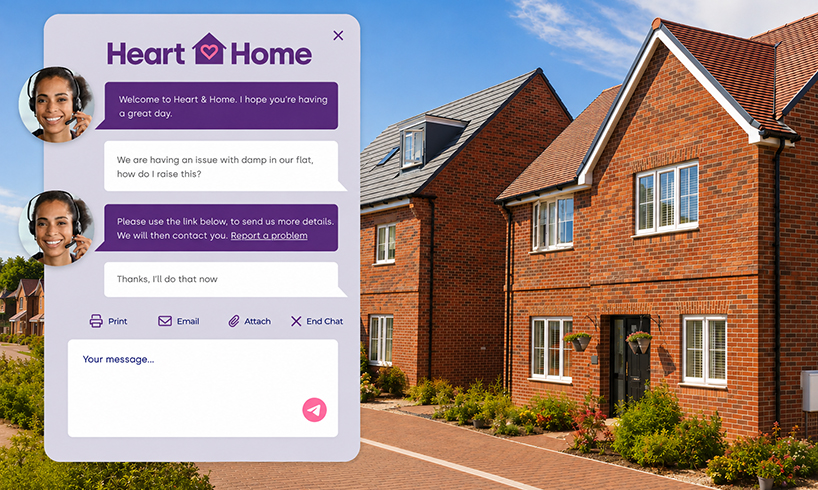
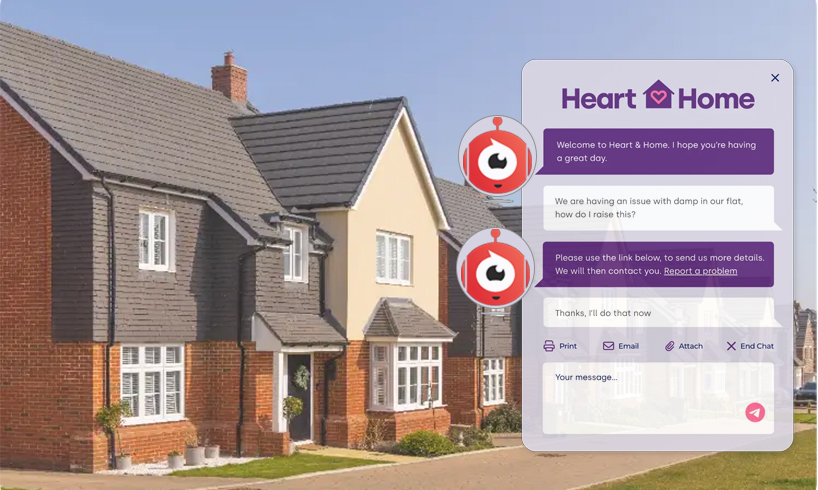
Digital technology has an important role to play, but it should never be viewed as a replacement for human interaction. The most effective organisations are using live chat for housing associations to make routine communication easier while ensuring staff remain available when conversations require empathy, judgement or more detailed support.
Getting that balance right is becoming increasingly important as demand continues to grow. Customer service teams are expected to respond across multiple channels, often dealing with thousands of enquiries every month. Telephone calls, emails, web chat, social media, resident portals and messaging services all have a place within a modern communication strategy, but only if they work together. Residents should not have to repeat the same information every time they make contact or feel as though different departments are operating independently of one another.
This is one of the reasons many housing providers are reviewing the way they communicate with residents. Rather than looking at individual channels in isolation, organisations are beginning to consider the entire resident journey. Every interaction contributes to the overall experience, from reporting a repair to receiving confirmation that the work has been completed. When those interactions feel connected and consistent, confidence grows.
Good communication has always been a hallmark of excellent customer service, but today's regulatory environment means it is also becoming an important measure of organisational effectiveness.
Ultimately, the recent reforms are about strengthening trust between housing providers and the people they serve. Safe homes will always be the foundation of good housing management, but residents also expect to be kept informed, listened to and treated with openness when issues arise.
For many organisations, the next few years will involve reviewing not only their policies and procedures but also the way they engage with residents on a day-to-day basis. That may mean introducing new communication channels, improving accessibility, creating more consistent customer journeys or ensuring that updates are provided more regularly. None of these changes require organisations to reinvent the way they work, but together they can make a significant difference to both compliance and resident satisfaction.
Technology has an important role to play in supporting that ambition, particularly as housing providers continue to manage increasing demand with limited resources. When implemented well, it can help residents find information more easily, receive updates through their preferred channel and access support outside traditional office hours. Just as importantly, it can free up customer service teams to spend more time dealing with the conversations that genuinely need empathy, experience and human judgement.
Building Trust
At Click4Assistance, we've worked alongside housing associations and local authorities for more than twenty years. During that time we've seen first-hand that the most successful organisations are rarely those with the biggest budgets. They are the ones that make communication a priority, because they recognise that every conversation is an opportunity to build confidence and strengthen relationships.
As the regulatory landscape continues to evolve, communication is becoming far more than an operational function. It is part of how organisations demonstrate accountability, evidence compliance and build lasting trust with their residents. Those that invest in getting it right today will be better placed to meet the expectations of regulators tomorrow.