










Live Chat for Central and Local Government
Live chat is a modern, efficient way for central and local government bodies to engage with residents, answer enquiries and provide accessible, real-time support across digital channels.
In an era where citizens expect fast, responsive service, government organisations are under increasing pressure to deliver on accessibility, efficiency and cost-effectiveness. Whether you are a local authority, city council, central government department or agency, deploying a live chat solution becomes an essential element of your digital infrastructure.
By integrating live chat, chatbots and AI-agents into public service workflows, you can shift routine enquiries off email and phone, free up staff to deal with complex matters and improve citizen satisfaction.
In this guide we’ll explore how live chat works in the public sector, the key components such as the chat window and agent dashboard, feature sets, the benefits for your organisation, and why Click4Assistance is a strong partner for central and local government.
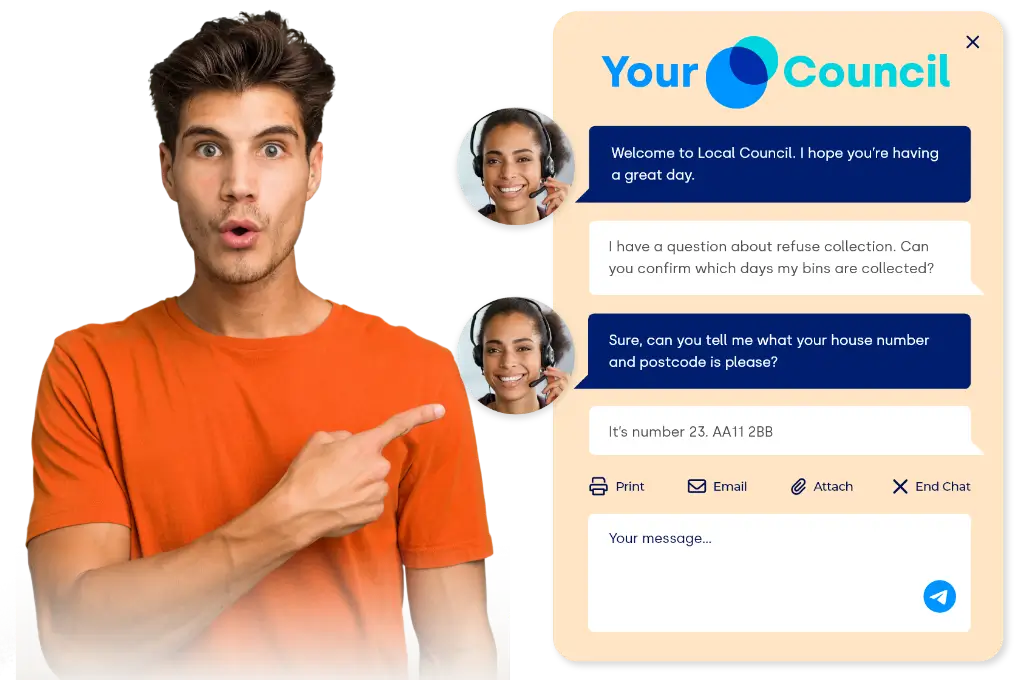
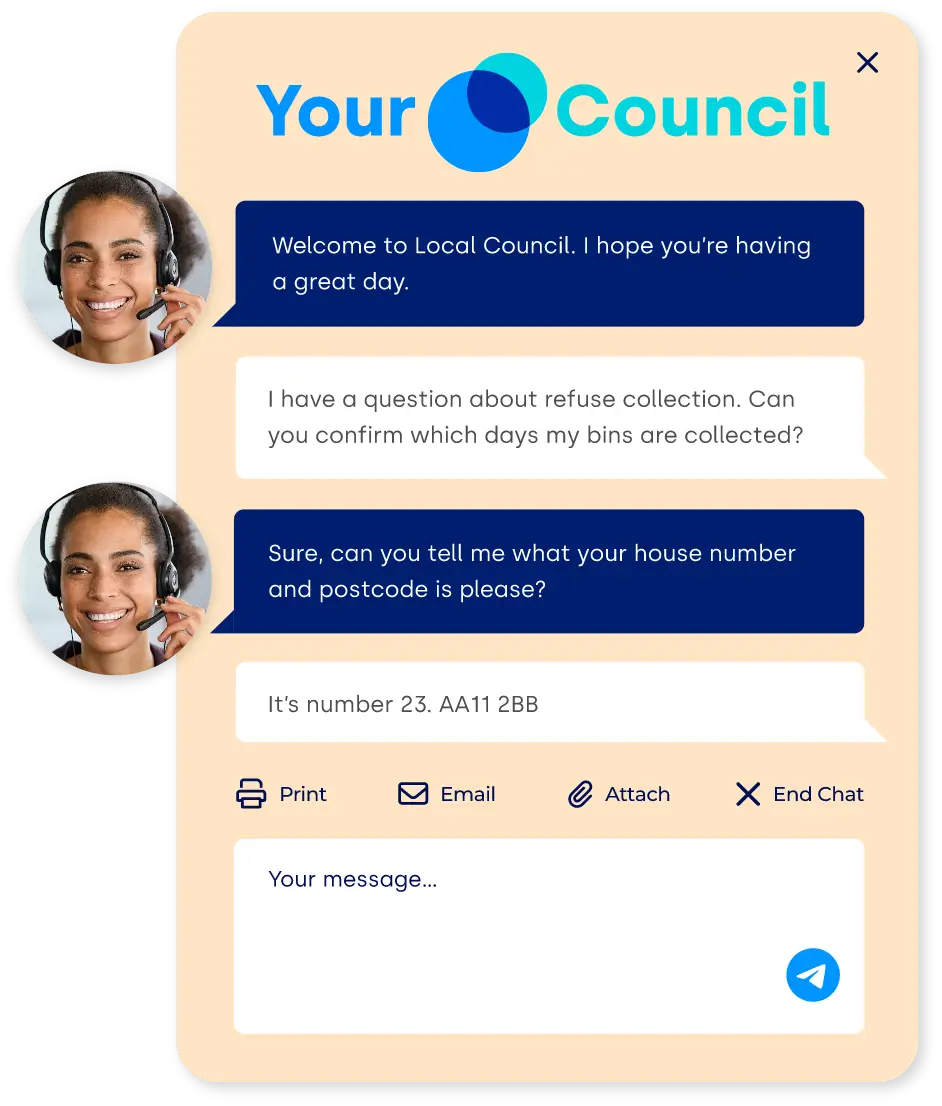
What Does a Live Chat Window Look Like for Central and Local Government Websites?
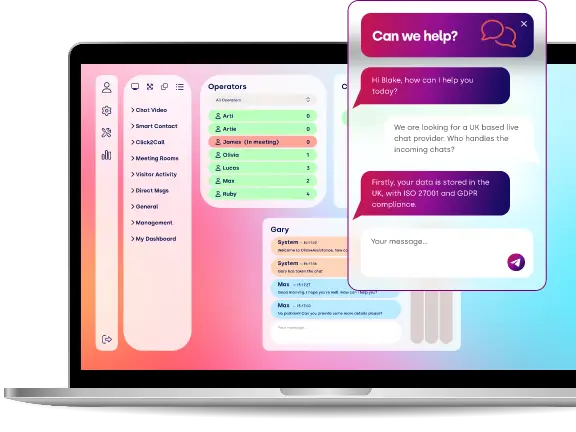
The “chat window” is the front-end interface that a resident or visitor sees when they initiate a live chat session on a government website. At its simplest, this might appear as a floating button or speech-bubble icon on the website (often in the bottom-right corner) which, when clicked, opens a chat panel.
What visitors see
- A greeting or prompt (“How can we help you today?”)
- A field to type a question or select from predefined options (for example “Council tax enquiry”, “Bin collection date”, “Housing benefit support”)
- Possibly a short pre-chat form asking for their name or department (especially in the government/public sector context) along with a disclaimer (e.g., “Agents cannot take payments here”). For example, one blog on local authority usage for the software notes:
“Before a visitor enters a chat … the council uses a pre-chat form that enables them to display a disclaimer: Agents are unable to take payments or discuss individual issues during a chat session.”
- Live chat with an agent, or hand-off to a chatbot/AI agent if configured
- Ability to share files (in secure, compliant fashion) or to send links, documents, or direct the user to a sign-posting page
- The chat window remains persistent as the user scrolls, ensuring support is always accessible. Example: “The chat button remains in view as the resident scrolls …”
How it’s used within central & local government
In a central or local government setting, the chat window offers many ways to improve service:
- Sign-posting: Users often arrive on a council website with minimal idea where to find what they need – the chat window can quickly ask “What are you here for?” and direct them to the right service. As one source states: “Local government authorities face a high volume of queries… Live chat services can help address people’s pain points and seamlessly direct them to the right location via pre-defined response and auto-navigation prompts.”
- Reducing call/phone load: Instead of residents phoning up and waiting in queues, the chat window offers a digital alternative, freeing phone lines for more complex enquiries. According to a government-sector page: “Offer immediate assistance for resident enquiries … Separates the bulk of your communication between live chat and telephone, reducing call volume and freeing up agents.”
- Accessibility and inclusion: A chat window can support multilingual responders or translation services, and can be configured to meet accessibility standards (keyboard navigation, screen-reader support) – something especially important in public-sector contexts. One page highlights: “AI-powered agents and live chat systems can communicate in multiple languages … ensuring that public services are accessible to diverse populations including individuals with disabilities or those in underserved communities.”
- 24/7 availability (when combined with bots/AI): Although human agents may only operate standard hours, the chat window can hand off to a chatbot outside hours, giving citizens access anytime. From the local-authorities page: “Our chatbots and AI agents provide round-the-clock support, allowing the public to access information and services anytime, even outside office hours.”
- Guided self-service: Within the window, an agent or bot can share forms, sign-posting links, schedule appointments, or accept uploads of documents. The government page includes examples such as “appointment scheduling … or form submissions” via AI chat.
Example industry-specific usage
- A local authority displays the chat window on waste collection, parking, housing applications pages. Visitors can click “Report a missed bin collection” and chat directly with an agent or bot which fills in required fields and routes to the correct department – as noted in the blog: “Horsham … local authority began using live chat software … within their bin collection area on their council website.”
- A central government department might embed the chat window for public benefit enquiries (e.g., “How do I apply for a grant?”), letting the user interact with a bot first and then triaging to a human agent if needed. From the central government sector page: “Provide instant answers about council services, public transport updates … manage routine enquiries … allowing staff to focus on more complex or urgent cases.”
In sum, the chat window is the user-facing gem of live chat in government – a friendly, accessible entry point that can significantly improve the citizen experience while reducing strain on internal teams.
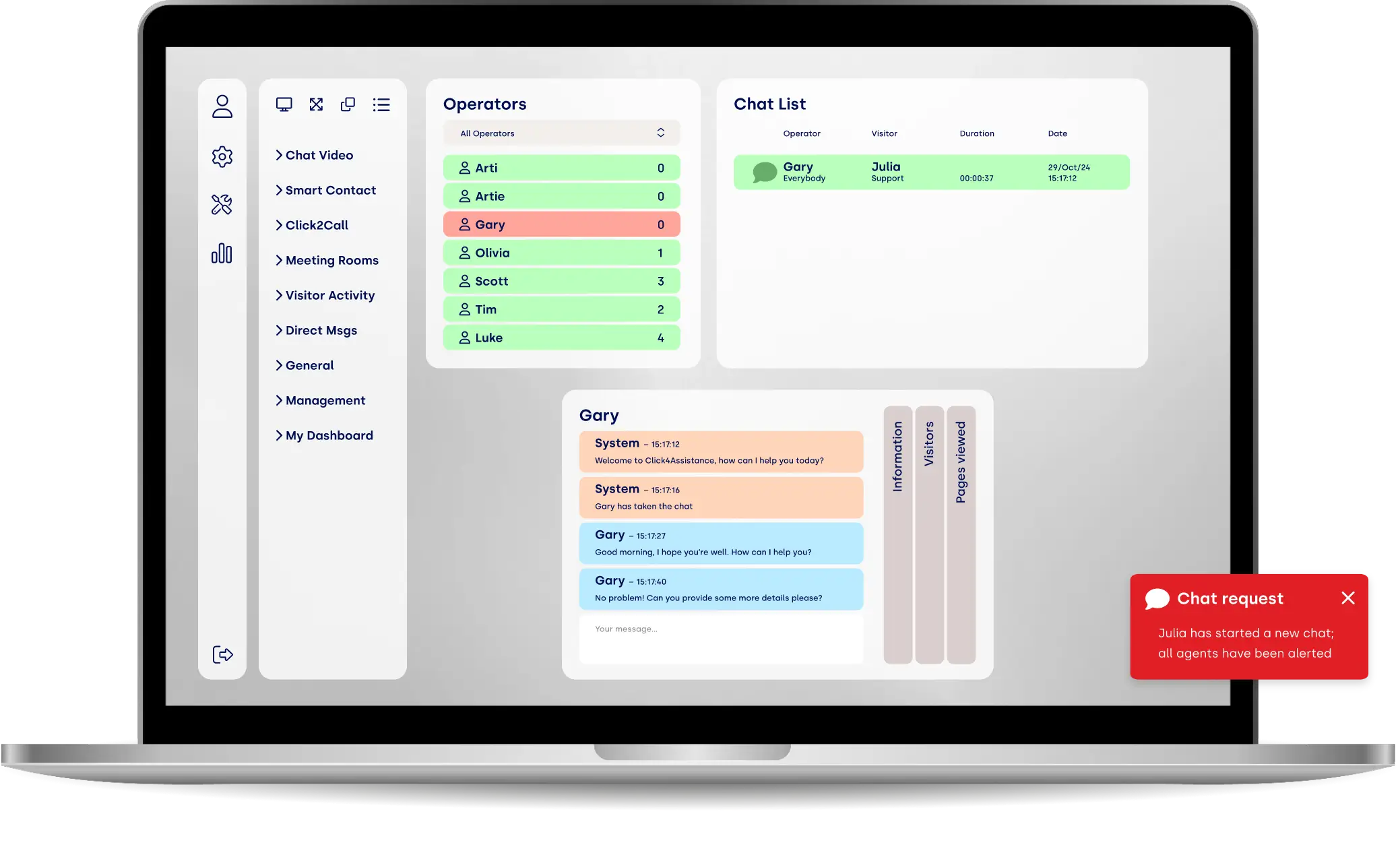
How Can Central and Local Government Teams use a Live Agent Dashboard?
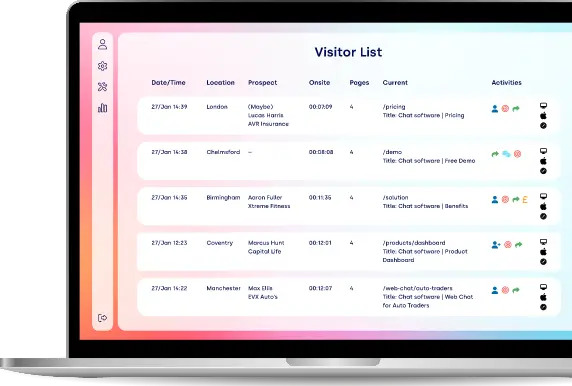
Behind the scenes, the agent dashboard is where staff, customer service teams or contact centre agents manage live chat sessions, monitor performance, and let the organisation deliver quality service.
Role and functionality in the public sector
For central and local government organisations, the agent dashboard supports the workflow in several important ways:
- Routing & queuing: The dashboard provides intelligent chat distribution, so enquiries are automatically routed to the correct department or team (for example: housing, benefits, highways) rather than being manually forwarded. According to Click4Assistance’s government-sector page: “We provide an intelligent chat distribution system for direct routing to multiple departments and integration with your existing systems using our APIs.”
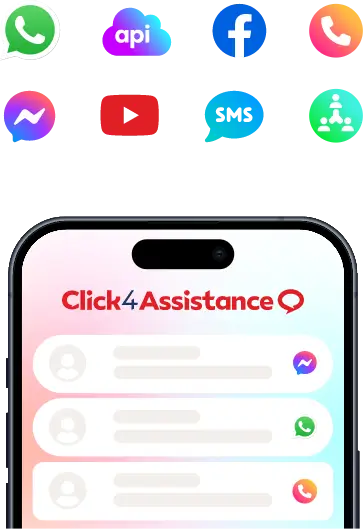
- Multi-channel management: Agents often have to deal with more than one channel (live chat, WhatsApp, Facebook Messenger, SMS). The dashboard aggregates these into a single interface. The government page notes: “Enable the public to reach your team via WhatsApp, SMS, Facebook Messenger or live chat – all managed from a unified dashboard.”
- Concurrent chats: Unlike a voice call, a trained agent can manage multiple chat sessions simultaneously, improving efficiency. The local authority page points out: “The typical chat duration for local authorities averages 4 minutes and 22 seconds… Trained advisors can tackle multiple chats at once, reducing the overall load on the team.”
- Pre-defined replies and sign-posting: Dashboards can integrate libraries of standard answers or scripts, which agents can deploy quickly to handle common enquiries (such as bin collections, council tax, etc.). The blog on local authority usage mentions:
“Operators … have access to a library of agreed responses … predefined replies allow the representative to answer the visitor accurately and quickly, helping to save resources by handling multiple chats simultaneously.”
- Auto-navigation and link sharing: Agents can direct visitors to relevant forms, pages, or resources within the chat. Example: “Councils use Predefined Replies … with links to further information and forms within the portal.”
- Analytics, reporting & management information (MI): The dashboard offers real-time and scheduled reports to monitor performance: number of chats, response times, resolution rates, service uptime, etc. The local authority page states: “Get advanced reporting including MI (Management Information) and audit capabilities and analytics at your fingertips.”
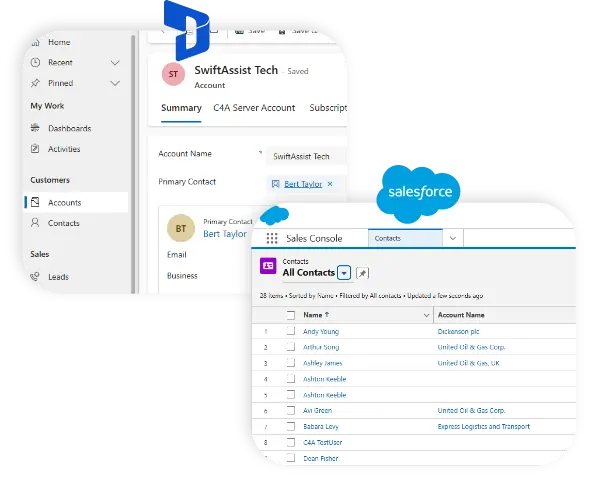
- Integration with back-office systems: The agent dashboard often links to other internal systems (CRM, case management, ticketing), enabling seamless workflow from chat to resolution. According to the Digital Marketplace listing for Click4Assistance: “Ability to integrate with legacy back office systems using APIs.”
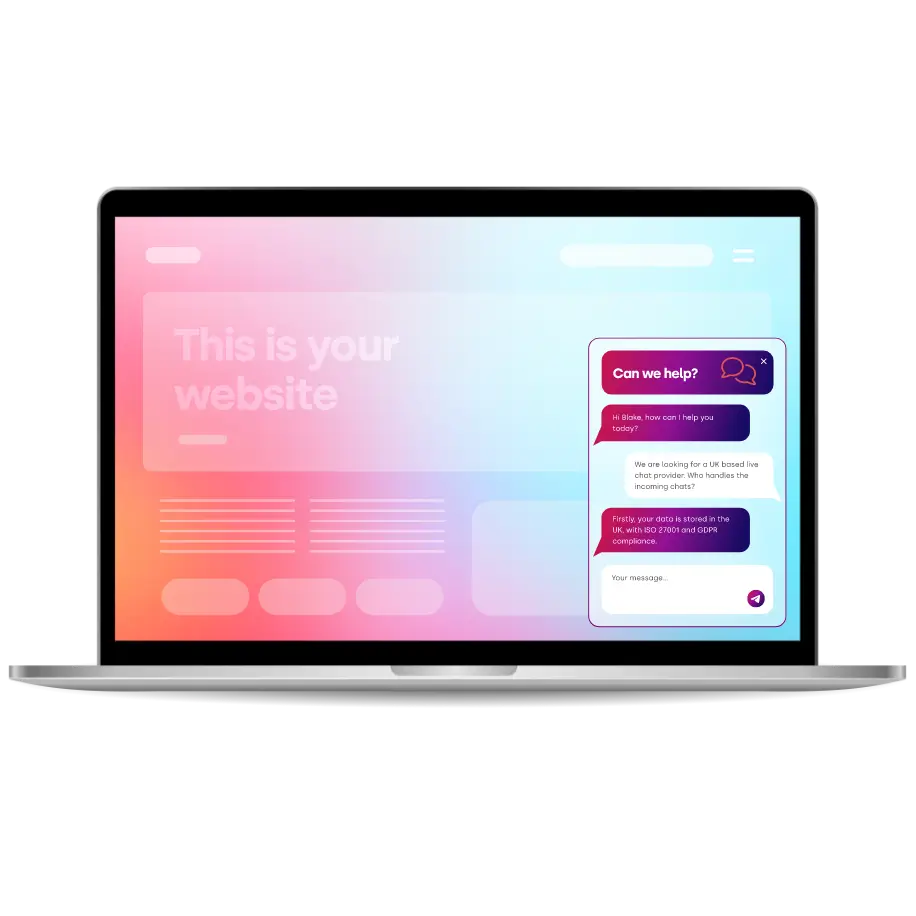
- Security & compliance controls: Given public-sector requirements around data security (GDPR, ISO27001, government frameworks), the dashboard supports audit logging, secure file sharing, data encryption and UK-based data hosting. The government page emphasises: “As a UK-based provider with ISO 27001 accreditation, we prioritise data security and compliance. Your data remains secure and is always hosted within the UK, meeting the strictest privacy and regulatory standards.”
Benefits for staff and the citizen experience
From a staff perspective, the agent dashboard:
- Reduces repetitive work (via canned responses and bots handling basic enquiries)
- Enables agents to focus on higher-value interactions that require human judgement
- Helps teams handle surges in demand (e.g., during emergencies, seasonal spikes) thanks to routing and multi-chat handling
- Gives managers insight into performance, enabling continuous improvement
- Supports service quality, consistency and timeliness
From a citizen/resident perspective:
- They receive a faster, more consistent response
- They benefit from smoother transitions between channels (chat, bot, agent)
- They benefit from the advisor having context (since chat history, routing and integrations provide visibility)
- Their queries are resolved quickly, reducing frustration and improving satisfaction
Overall, the agent dashboard is the engine room that underpins the “friendly chat window” front-end, making live chat for central and local government truly operational and effective.
AI Agent and Chatbots: Supporting Central and Local Government Visitor Interactions
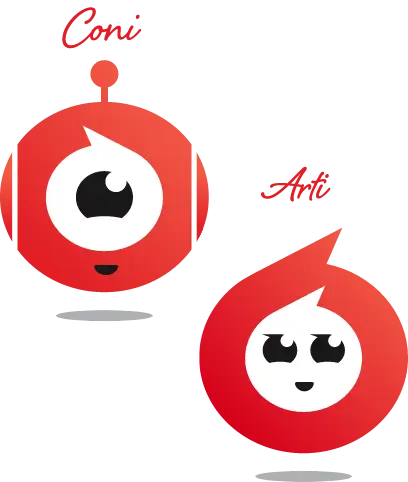
In addition to live chat (human-agent support), modern public sector organisations are increasingly deploying AI agents and chatbots to handle routine or high-volume enquiries. For example, Click4Assistance offers “Coni” (a conversational chatbot) and “Arti” (a more advanced AI-agent powered by large-language model technology) for government and local authority settings.
Chatbots can triage enquiries when agents may not be available, respond after hours, and handle straightforward tasks such as checking bin collection schedules, reporting a pothole, or booking an appointment. They free staff for more complex enquiries, improve access (e.g., 24/7 support), and help organisations scale their service without linearly increasing headcount. While bots cannot yet replace the human judgement needed for complex cases, they can act as first-line support and hand-off to an agent when appropriate.
Key Features of Click4Assistance’s Live Chat Solution for Central and Local Government
Here are up to eight key features of using live chat (and associated chatbots/AI) in central and local government contexts:
- Omnichannel integration
o Live chat, WhatsApp, SMS, Facebook Messenger, email and video chat can all be managed via one platform.
- Intelligent chat routing and department-level distribution
The system routes enquiries to the correct team or department based on user input, service type or page context.
- Pre-defined responses and auto-navigation
Agents (or bots) can use pre-built libraries of responses and prompt the user with relevant links, forms or service pages. This allows fast resolution of common queries (e.g., bins, council tax, housing).
- Secure UK-based hosting and compliance
Data is hosted in the UK, the provider holds ISO 27001 accreditation, and systems meet GDPR and public-sector regulatory frameworks.
- Real-time analytics and reporting
Dashboards offer management information (MI), audit trails, performance metrics (chat volume, resolution time) allowing service improvement.
- Scalability during peaks / emergency response readiness
Licences can expand during service surges or emergency situations; agents can handle multiple chats simultaneously.
- Accessibility & inclusion features
Multi-language support, translation, secure file upload and accommodations for individuals with disabilities.
- Smooth hand-off from chatbot to human agent
Chatbots take first-line queries and escalate to a human when needed, ensuring continuity and avoiding dead ends. The government page highlights the hand-off capabilities.
Benefits of Live Chat for Central and Local Governments
Here are up to eight benefits specific to central and local government organisations deploying live chat solutions:
- Reduced call and email volume: By diverting routine enquiries into chat (or automated bots) and reducing phone and email traffic, service teams can focus on complex cases. (Government site: “Separates the bulk of your communication between live chat and telephone, reducing call volume and freeing up agents.”)
- Faster response times and higher satisfaction: Chat enables real-time responses rather than queueing or email delays. For example: “The typical chat duration for local authorities averages 4 minutes and 22 seconds.”
- Improved accessibility and inclusion: Citizens can access services outside traditional hours (via chatbot/AI) and across channels (chat, SMS, WhatsApp). For example: “Our chatbots and AI agents provide round-the-clock support … allowing the public to access information and services anytime, even outside office hours.”
- Cost savings and improved resource allocation: Lower telephone staffing, fewer redundant queries, fewer waiting times means better use of resources. The local-authorities page says: “Our live chat solutions help reduce resource costs … staff productivity with a compliant, cost-effective online communication solution.”
- Better citizen engagement and experience: A modern live chat interface shows the organisation is accessible and responsive, enhancing trust and satisfaction. As one article states: “Getting back to people quickly improves public perception, confidence and trust.”
- Higher first-contact resolution rates: With chat routing, sign-posting, and agent support, agencies can resolve more enquiries on first contact. The blog noted: “The chat interface and dashboard is easy and straightforward to use … allowing the council’s experts to respond to related enquiries and improve first contact resolution rates.”
- Scalable during peak and emergency times: The ability to scale licences and handle surges means government agencies can maintain performance during spikes (e.g., elections, emergencies, service disruptions). From the local-authorities page: “Licence scalability during peak times.”
- Data-driven improvement and audit-friendly: Chat tools generate data on enquiries, chat flows, peak times, which allows agencies to identify service bottlenecks, improve processes, and maintain audit trails for compliance. The MI-reporting feature supports this.
Together, these benefits make live chat not just a nice-to-have, but a strategic tool for government services looking to modernise, improve citizen satisfaction and reduce pressure on traditional channels.
Why Choose Click4Assistance for Your Central and Local Government
When selecting a live chat provider for central and local government, there are several criteria to consider: security & compliance, scalability, multi-channel capability, experience in the public sector, UK-based support, and flexibility for page-specific deployment. Here’s why Click4Assistance stands out:
- Proven public sector experience: Click4Assistance has over 20 years of experience providing live chat, web chat, chatbot and AI solutions, and many of their clients are UK public-sector organisations (councils, local authorities, government departments) with complex demands.
- UK-based data hosting & ISO 27001 accreditation: They emphasise that your data remains hosted in the UK, with full GDPR and public sector regulatory compliance. From their pages: “As a UK-based provider with ISO 27001 accreditation, we prioritise data security and compliance. Your data remains secure and is always hosted within the UK.”
- Scalable licensing and multi-channel support: The solution supports surge periods, multiple communication channels, routing and integrations for complex environments. Example: “Flexible licences ensure your live chat solutions scale with your needs.”
- Flexible deployment and customisation: You can customise chat windows, forms, branding, routing rules and more to match your service needs. For example, the blog on local authorities described chat button design and pre-chat forms.
- Strong reporting & analytics: For public sector performance measurement and audit requirements, Click4Assistance delivers advanced reporting, MI dashboards and audit logs.
- Support for accessibility, inclusion and digital transformation: They address multilingual support, accessibility requirements and deliver services designed for the public sector (not generic retail).
- Fast time-to-value: With pre-built modules for public sector use (council tax queries, bins, benefits, etc.), these solutions reduce need for lengthy tender processes and help deliver ROI quickly. Example: “Low-cost implementation of live chat software can also negate the need for lengthy tender processes and provide an exceptional return on investment within the first year.”
In short, for a central or local government organisation looking for a robust, compliant live chat platform, Click4Assistance offers a tailored, proven, UK-based solution with the right features, sector experience and support to deliver.
Frequently Asked Questions (FAQs)
- Is live chat secure and compliant for a government organisation?
Yes. With the right provider, live chat can be fully secure and meet public sector standards. For example, Click4Assistance hosts data in the UK, is ISO 27001 accredited, and offers audit capability and MI reporting. When deploying, ensure that chats are encrypted, sessions are logged, and there are appropriate access controls.
- How difficult is setup and integration with existing systems?
Setup can be straightforward. Modern platforms support APIs and integrations with existing back-office systems, CRMs, case management tools. Click4Assistance notes ability to integrate with legacy systems using APIs. Many public-sector roll-outs start small (pilot) and scale gradually.
- What about out-of-hours service or high-volume demand?
Live chat platforms can be paired with chatbots/AI agents which operate 24/7, triaging enquiries and handing off to human agents when needed. The chat window and AI agent approach means residents can access service anytime. The solution also supports licence scalability to handle surge periods.
- Will this improve citizen satisfaction and reduce workload?
Yes. Live chat enables faster responses, more efficient handling of common enquiries, and reduces pressure on phones and email. Local authority research by Click4Assistance indicates average chat duration of ~4 minutes and 22 seconds, and that agents can handle multiple chats simultaneously. By streamlining simple queries, staff are freed to focus on more complex tasks.
- Can the chat window be customised to our branding and services?
Absolutely. Providers like Click4Assistance offer customisable visitor windows, pre-chat forms, branding options and the ability to deploy chat on specific pages or service areas. For example: “Councils … fully customised their visitor facing aspects with their logos and corporate colours to fit seamlessly with their website.”
Summary
In today’s digital-first world, central and local government organisations must adopt modern communication tools to meet citizen expectations and operational demands. Live chat offers a powerful way to deliver real-time support, streamline service delivery and enhance satisfaction. A well-designed chat window gives residents an easy way to engage; a robust agent dashboard empowers service teams to route, manage and respond efficiently; and when combined with chatbots/AI agents, the system becomes scalable, 24/7 and smart.
By choosing a specialist provider like Click4Assistance, government bodies benefit from UK-based data hosting, public-sector experience, compliance with ISO/GDPR standards, multi-channel support and analytics for continuous improvement. If your department or local authority is looking to modernise resident engagement, reduce workload, improve first-contact resolution and demonstrate digital service excellence, live chat is a strategic investment.
Ready to explore further? You can request a demo, pilot the solution on a high-volume service area (such as bin collections, benefits or housing enquiries) and see the difference live chat can make for your organisation’s digital transformation.
Thousands Trust Us. Will You?
From live chat to AI-powered chatbots and social integrations, Click4Assistance powers real-time engagement - fully UK hosted and trusted across industries.