















The Value of Chatbots for Retail & Ecommerce
We examine how chatbots are changing retail and ecommerce, capturing attention at key moments, removing friction instantly, and converting casual browsing into decisive, revenue-driving customer actions.
In today’s UK retail and ecommerce landscape, every customer interaction matters more than ever. Shoppers expect fast, accurate answers, personalised recommendations, and seamless experiences across every touchpoint, whether they’re browsing on their phone late in the evening, tracking a delivery during a lunch break, or asking a final product question just before checkout. Expectations are high, patience is limited, and competition is only a click away.
For many UK retailers, meeting these demands consistently, and at scale, is a growing challenge. Rising customer service volumes, pressure on margins, and the need to deliver always-on support make traditional approaches harder to sustain.
This is where chatbots for retail and ecommerce are making a measurable difference.
By combining conversational chatbots with real-time product information, order management systems, and customer data, retail chatbots allow brands to engage shoppers at key points in their buying journey. They help customers find the right products quickly, answer common questions instantly, and complete purchases with confidence. At the same time, chatbots reduce pressure on support teams, improve operational efficiency, and give UK retailers a scalable way to deliver consistent, high-quality service 24/7.

Why Chatbots Are Becoming Essential for Retail and Ecommerce
The way customers shop has fundamentally changed. They want:
- Immediate responses, not email or phone queues
- Personalised guidance, not generic FAQs
- Always-on support, not limited business hours
- Seamless experiences across web, mobile, and messaging apps
At the same time, retailers face rising costs, higher customer expectations, and intense competition. Hiring more staff isn’t always sustainable, but ignoring customer experience isn’t an option either.
That’s where chatbots for retail and ecommerce come in.
Retail chatbots bridge the gap between speed, scale, and personalisation, helping brands convert more visitors, reduce operational costs, and deliver consistently great experiences.
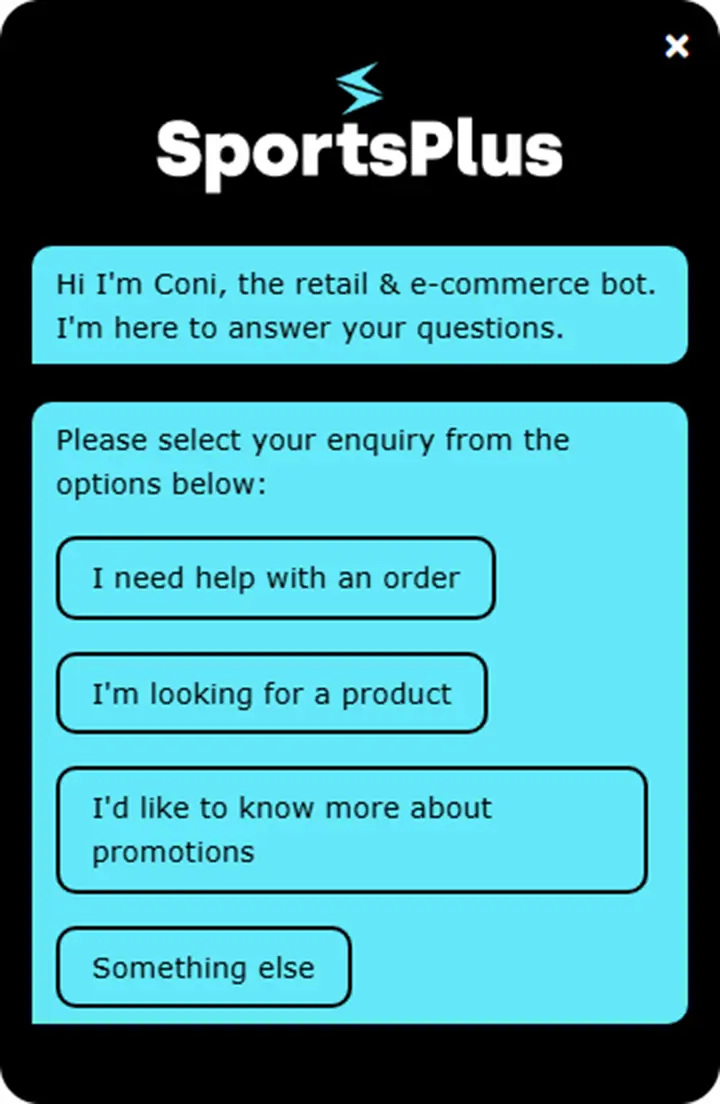
What Is a Retail & Ecommerce Chatbot?
A retail and ecommerce chatbot is a conversational tool designed to support customers across online journeys. These chatbots generally fall into two categories: rules-based chatbots, which follow predefined flows, and AI-powered chatbots, which use natural language understanding to respond more dynamically.
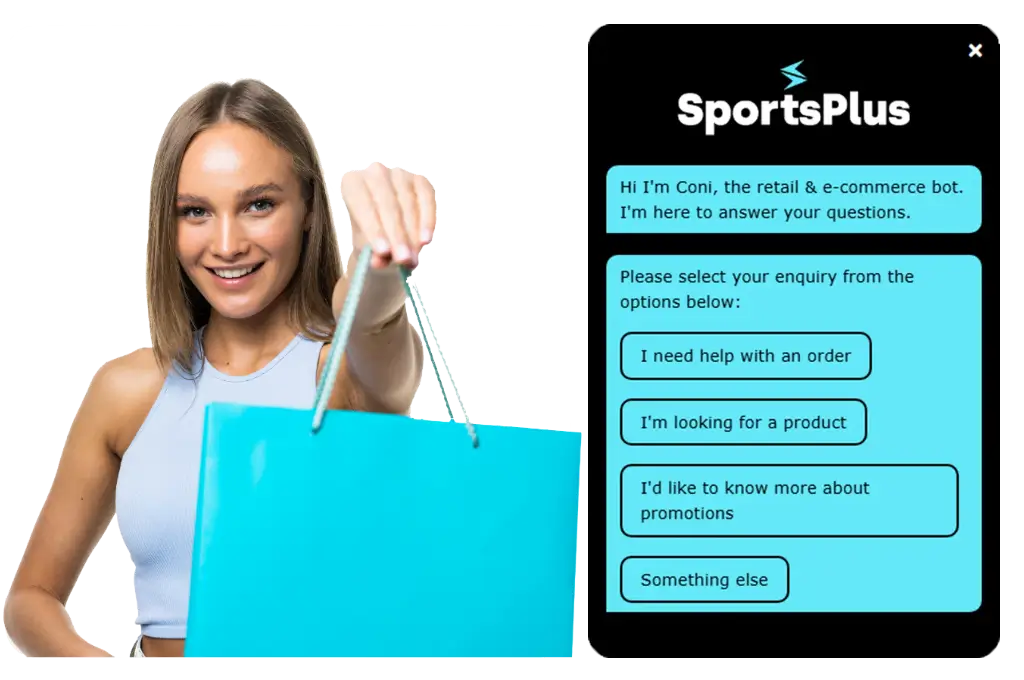
Rules-based chatbots offer clarity, reliability, and control. They are highly effective for handling structured tasks such as FAQs, order tracking, returns, store information, and guided journeys where consistency and compliance matter. For many retailers, this allows a cost-effective introduction to automation, and a great way to understand the customer journey requirements.
AI-powered chatbots build on this by understanding customer intent and context, even when questions are phrased in different ways. They can connect to real-time product, pricing, and inventory data, support product discovery and checkout, handle more complex order and account queries, and improve over time through learning.
Rule-based chatbots:
- Follow structured, predefined conversation paths
- Handle FAQs, order tracking, returns, and store information reliably
- Provide consistent, controlled interactions that meet compliance needs
- Offer a dependable foundation for automation
AI-powered chatbots
- Understand customer intent and context, even with varied phrasing
- Connect to real-time product, pricing, and inventory data
- Guide customers through product discovery and checkout
- Handle complex order and account queries
- Learn and improve over time for more natural interactions
Combined benefits:
- Deliver faster, more helpful conversational experiences
- Support customers across the entire buying journey
- Reduce pressure on sales and support teams
- Scale operations without sacrificing service quality
Used independently or together, both approaches bring real value. The result is a faster, more helpful conversational experience for customers, and a scalable way for retailers to support sales and service without adding pressure to customer support teams.
Where Chatbots Add Value Across the Customer Journey
Online shoppers today expect speed, guidance, and relevant recommendations. Retailers that deliver are rewarded with higher engagement and loyalty. Chatbots are proving to be more than just support tools: they act as digital sales assistants, helping customers find what they want, discover new products, and complete purchases with confidence.
- Product Discovery, Browsing & Upsell
Finding the right product quickly is one of the biggest hurdles for online shoppers. Long search results, overwhelming options, or unclear product information can frustrate customers and lead them to abandon a site entirely. A retail chatbot acts like a personal sales assistant, helping shoppers navigate the store, discover relevant items, and even uncover products they might not have considered.
Chatbot capabilities include:
- Answering product questions in real time
- Recommending products based on needs, style, budget, or preferences
- Comparing products, features, and variants
- Highlighting bestsellers, alternatives, bundles, or seasonal picks
- Suggesting complementary products or upgrades (upsells) at key points in the journey
By guiding shoppers instead of forcing them to scroll, chatbots replicate the personalised attention customers expect in a physical store, boosting engagement and satisfaction. For examples, see the different uses cases.
- Conversion & Checkout Support
Cart abandonment continues to be one of the most persistent challenges for online retailers, with many shoppers leaving just before completing their purchase due to uncertainty or friction. Retail chatbots provide timely, personalised support during the critical moments of decision-making. By offering guidance, reassurance, and targeted prompts, chatbots for retail and ecommerce websites help customers feel confident and reduce hesitation, turning potential abandonments into completed sales.
Chatbots can:
- Answer last-minute questions about sizing, delivery options, returns, or product features
- Clarify pricing, discounts, promotions, or any special offers
- Guide customers through checkout steps in real time, reducing confusion and errors
By addressing uncertainty and removing friction, chatbots not only improve the checkout experience but also increase overall conversion rates. They act as a virtual assistant, smoothing the final steps of the buying journey while subtly encouraging additional purchases or upgrades. For retailers, this means fewer lost sales, higher revenue per customer, and a more seamless, professional shopping experience.
- Order Tracking & Post-Purchase Support
One of the most common questions in retail is “Where is my order?” and handling these queries can be time-consuming and costly for support teams. Post-purchase support is critical to maintaining customer trust and loyalty, especially in a competitive UK ecommerce market where delivery expectations are high and same-day or next-day services are increasingly standard. Chatbots provide instant, accurate information to reassure customers and reduce the volume of repetitive support requests.
Chatbots can:
- Share delivery tracking links and estimated arrival times
- Handle cancellations, amendments, and refund requests
- Escalate complex cases seamlessly to human agents when needed
By offering immediate, automated assistance, chatbots give customers peace of mind and transparency throughout the post-purchase process. For retailers, this reduces pressure on customer service teams while maintaining high levels of satisfaction, encouraging repeat purchases, and fostering long-term loyalty. Customers who feel informed and supported are more likely to return and recommend the brand to others.
- Customer Service & FAQs
Retail chatbots excel at handling high volumes of routine queries, ensuring that customers get answers quickly without waiting on hold or browsing through long FAQ pages. This frees up human agents to focus on more complex or high-value interactions, improving operational efficiency and overall service quality.
Typical queries include:
- Returns, exchanges, and refund policies
- Store locations, opening hours, and contact information
- Loyalty programme details and rewards
- Accepted payment methods and checkout assistance
By automating responses to repetitive questions, chatbots ensure consistent, accurate answers 24/7. This leads to faster resolution times, higher customer satisfaction, and reduced support costs. At the same time, human agents can concentrate on resolving issues that require empathy or decision-making, such as complaints, complex returns, or personalised recommendations, creating a more efficient and customer-friendly support system.
- Personalisation & Loyalty
In today’s competitive UK ecommerce market, customers want experiences that feel relevant, thoughtful, and tailored to their individual preferences. Personalisation is no longer optional; it’s a key driver of engagement, repeat purchases, and long-term loyalty. Retail chatbots make this personal touch scalable, delivering recommendations and interactions that feel genuinely human.
Chatbots can:
- Greet customers within the chat session, creating a friendly, approachable tone
- Recommend products based on the customer’s queries
- Answer loyalty programme questions, such as how to earn points or redeem rewards
- Provide tailored guidance based on selections made during the session (e.g., showing matching accessories when a product is selected)
- Respond to questions about promotions, discounts, or available bundles
By providing contextual experiences, chatbots encourage customers to explore more products, engage with loyalty programmes, and return more frequently. This level of personalisation creates a feeling of being valued and understood, which can strengthen brand affinity and drive repeat business.
From helping shoppers discover products and providing upsell opportunities to supporting checkout, tracking orders, answering FAQs, and personalising experiences, chatbots are transforming retail and ecommerce. UK retailers can deliver faster, smarter, and more scalable service, driving higher conversions, greater customer satisfaction, and long-term loyalty.
Key Benefits of Chatbots for Retail & Ecommerce
We have established that retail and ecommerce chatbots are no longer just a novelty — they are essential tools for improving customer experiences, driving sales, and reducing operational strain. From guiding shoppers through product discovery to providing real-time support, chatbots deliver measurable benefits for UK retailers of all sizes.
Increase Conversion Rates
Cart abandonment and indecision are persistent challenges for online retailers. Chatbots remove friction at the exact moment customers need help, providing instant answers and guidance during product discovery and checkout. By addressing questions about sizing, delivery, promotions, or product features in real time, chatbots help shoppers make confident decisions, leading to:
- Higher conversion rates
- Increased average order value
- Reduced abandoned carts
Reduce Customer Support Costs
Handling repetitive queries can overwhelm support teams and increase costs. Chatbots can resolve a significant portion of routine customer questions without human intervention, freeing up agents for more complex tasks. This leads to:
- Lower operational costs
- Faster response times
- Consistent, accurate support
Deliver 24/7 Customer Service
Shoppers expect support outside traditional office hours, especially during peak periods or seasonal campaigns. Chatbots provide consistent, round-the-clock assistance across all time zones, ensuring:
- Customers always have access to answers
- Busy periods are handled without delays
- Brand reputation remains high even during peak traffic
Scale Without Hiring
Whether it’s a flash sale, a seasonal promotion, or a major product launch, chatbots scale instantly to handle surges in traffic without recruitment, training, or scheduling headaches. Retailers benefit from:
- Immediate capacity expansion
- Cost-effective scaling
- Seamless handling of peak shopping periods
Improve Customer Satisfaction
Fast, accurate, and helpful responses create positive experiences that resonate with shoppers. Happy customers are more likely to:
- Complete purchases confidently
- Return for repeat purchases
- Leave positive reviews and recommend the brand
Chatbots help retailers maintain these experiences consistently, building trust and loyalty over time.
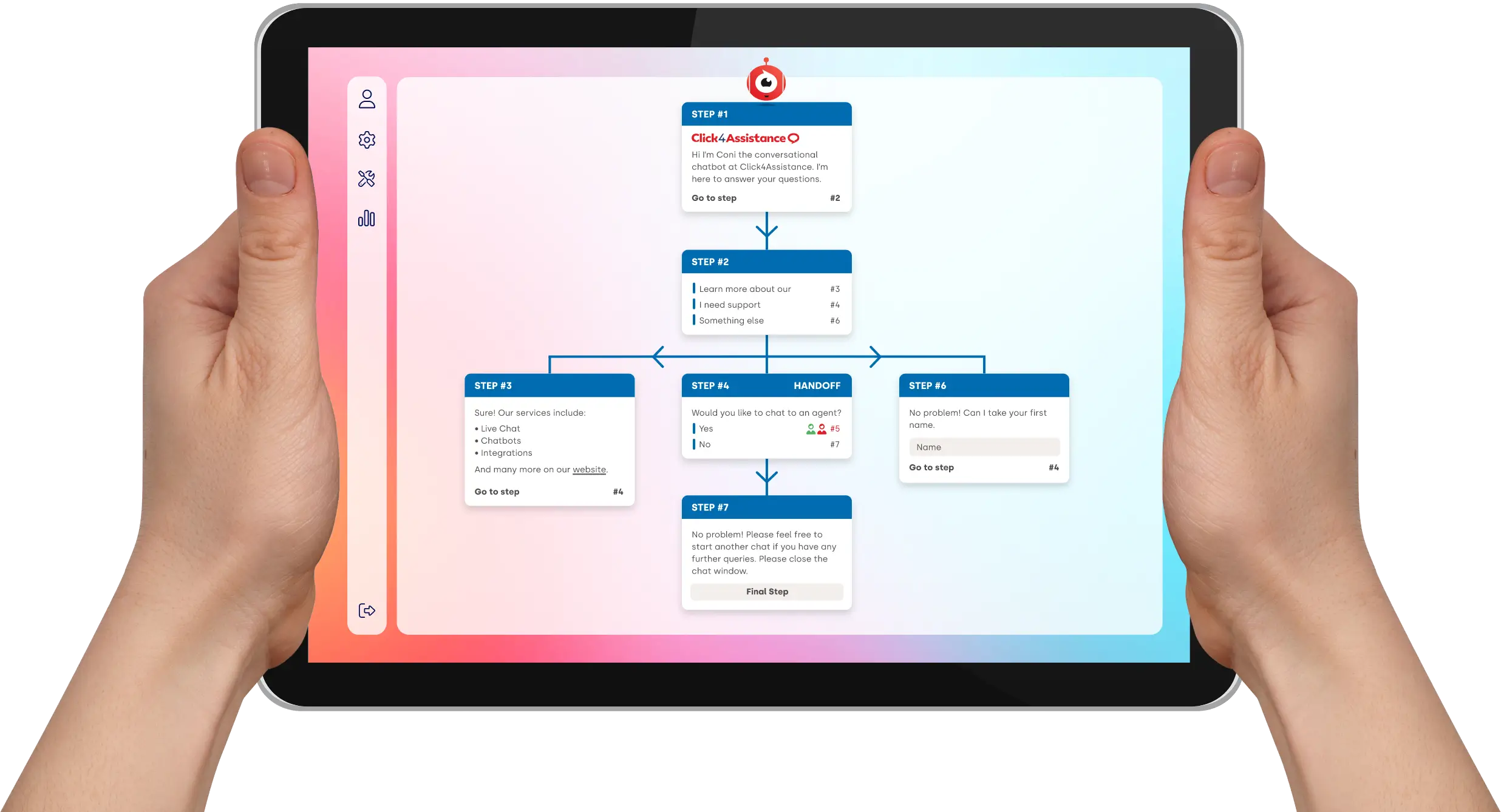
Smart, Flow Driven Chatbots
Traditional chatbots often relied on rigid scripts, frustrating users and undermining trust. Modern flow-based chatbots follow predefined decision paths to:
- Guide users step by step through common questions
- Handle different choices or paths within the flow
- Provide consistent responses without relying on free-text understanding
- Ensure predictable, reliable interactions
The result is a structured, easy-to-follow conversational experience that helps shoppers find answers, complete tasks, and interact confidently with your brand.
Industry-Specific B2C Chatbot Use Cases
Chatbots can be tailored to meet the unique needs of different retail sectors, providing real-time assistance, guidance, and personalised recommendations that enhance the customer experience and drive sales. Here’s how they can support various industries:
Fashion and Apparel
In the fashion sector, customers often need help with size, fit, and styling, and these are decisions that can make or break a sale.
Some suggestions for what Chatbots can do:
- Provide size and fit guidance, including UK/European sizing conversions and recommendations based on similar purchases
- Assist with returns and exchanges, guiding customers through the process
- Help customers find stock information by directing them to store pages, product listings, or alternative options if items are unavailable
By helping shoppers make confident choices, fashion chatbots reduce returns, increase conversions, and provide a personalised, boutique-like experience online.
Beauty and Cosmetics
Beauty shoppers often seek highly specific guidance, particularly when it comes to skin care or makeup.
Chatbots in this sector may:
- Suggest product matches based on skin type, tone, or hair type, helping customers find the most suitable products
- Assist in routine building, offering tips and upselling complementary products (e.g., cleanser → serum → moisturiser)
- Answer ingredient and allergy questions, giving customers confidence in their selections and avoiding potential reactions
This type of support can transform the online beauty experience into a personalised consultation, similar to in-store expertise, while increasing basket value.
Electronics and Technology
Electronics shoppers often need detailed technical information to make informed purchases.
Chatbots can:
- Offer feature comparisons between devices, highlighting differences in specs or functionality
- Guide customers on checking compatibility for accessories, software, or smart home integration
- Provide step-by-step warranty and technical support guidance, including setup instructions and troubleshooting tips
For tech brands, chatbots reduce support tickets, guide customers to the right product, and create confidence for higher-value purchases.
Grocery & FMCG
Grocery and fast-moving consumer goods (FMCG) shoppers value convenience and accuracy.
Chatbots can:
- Guide customers on how to check product availability in store or online
- Suggest alternative products or options if items are unavailable
- Help customers navigate repeat orders and favourites, making it easier to reorder essentials or household staples
By providing quick answers and seamless ordering, grocery chatbots enhance convenience, reduce order errors, and encourage repeat purchases.
Luxury and Direct-to-Consumer (DTC) Brands
High-end and DTC brands thrive on premium, personalised experiences.
Chatbots in this sector can:
- Guide customers through concierge-style support by walking them step by step through enquiries
- Offer session-based product suggestions based on choices or selections made during the conversation
- Provide post-purchase guidance, such as styling tips, product care advice, or instructions for arranging additional services
For luxury brands, chatbots act as a trusted assistant, enhancing the exclusivity of the experience while maintaining efficiency at scale.
Across every sector, chatbots enhance the customer journey by providing fast, relevant, and contextual assistance. Whether helping a fashion shopper find the perfect outfit, a beauty customer select the right skincare routine, or a tech buyer choose the right device, chatbots make online retail more personalised, efficient, and satisfying.
Trust, Security & Data Privacy
In the UK retail and ecommerce landscape, trust is everything. Customers are more cautious than ever about how their personal information is used, and brands that fail to handle data responsibly risk reputational damage, regulatory fines, and lost sales. For chatbots for retail and ecommerce to be effective, they must operate within strict security and data privacy standards, providing reassurance while delivering seamless service.
Key considerations for trust and compliance include:
- Secure data handling and encryption: All information exchanged between customers and chatbots, including names, email addresses, payment questions, and order details, should be protected using strong encryption protocols. This prevents unauthorised access and ensures sensitive data remains secure. For example, SSL/TLS encryption ensures that chat conversations are safeguarded just like secure web transactions.
- GDPR and data protection compliance: In the UK, chatbots must adhere to GDPR and other relevant regulations. This means collecting only necessary information, processing it lawfully, and giving customers control over their data. Customers must be informed about what data is collected and how it will be used, and they should be able to request deletion or corrections if needed.
- Transparent use of customer data: Trust grows when customers understand how their information is being used. Chatbots should clearly communicate their purpose, and only store or process data with consent. For example, if a chatbot helps with loyalty points, it should explain that data is being used to enhance the shopping experience, not for unrelated marketing.
- Human handover for sensitive issues: While chatbots are effective for routine queries, some situations require human intervention. Sensitive issues such as complaints, payment disputes, refund requests, or personal data updates should be escalated immediately to trained support staff. This not only protects customer information but also builds confidence in the brand’s professionalism and care.
- Privacy-by-design architecture: Leading providers design chatbots with privacy embedded from the start. This includes limiting data retention, anonymising information where possible, and ensuring that integrations with CRM, payment, or analytics systems maintain the same high standards of security.
- Ongoing monitoring and auditing: Trust is not static. Regular security audits, penetration testing, and monitoring ensure that chatbots remain resilient against emerging threats and continue to meet compliance standards. UK retailers should work with certified providers and follow ISO/IEC standards for data security to maintain accountability.
The business impact of trust:
A well-designed chatbot for retail and ecommerce builds confidence rather than eroding it. Customers are more likely to engage with chatbots that clearly prioritise security and privacy, ask only necessary questions, and escalate sensitive matters responsibly. This not only strengthens loyalty and brand reputation but also reduces the risk of regulatory penalties and customer churn.
In short, trust and security are the foundation of a successful retail chatbot. By handling data responsibly, being transparent about its use, and providing safe escalation paths for sensitive issues, chatbots can become a reliable, customer-friendly part of the online shopping experience. This will reinforce the brand’s credibility while improving efficiency and engagement.
Human and Chatbots: The Best of Both Worlds
Chatbots don’t replace human teams, they empower them.
When a conversation requires empathy, judgement, or complex problem-solving, the chatbot can seamlessly hand over to a human agent, passing along full context and conversation history.
This hybrid approach ensures:
- Faster resolution times
- Better agent productivity
- Higher customer satisfaction
Frequently Asked Questions (FAQs)
- Do chatbots replace human customer service teams?
No. Chatbots complement human teams. Routine queries are handled automatically, freeing agents to focus on complex, high-value interactions. When empathy or problem-solving is required, chatbots can seamlessly hand over conversations with full context.
- How can chatbots increase sales and conversions?
Chatbots guide shoppers through product discovery, answer questions in real time, provide upsell suggestions, and support checkout. By reducing friction and uncertainty, they help convert casual browsing into completed purchases, boosting conversion rates and average order values.
- What are the top 5 use cases for chatbots in retail?
Retail chatbots deliver value across the entire customer journey. The top five use cases include product discovery and upsell, conversion and checkout support, order tracking and post-purchase support, customer service and faqs and personalisation and loyalty engagement.
- How do I measure a chatbot’s success?
Retailers typically track metrics such as conversion rate uplift, cart abandonment reduction, average response time, customer satisfaction (CSAT) and resolution rate without human intervention. These insights help continuously optimise both chatbot performance and the wider customer journey.
-
What is the best chatbot for retail and ecommerce?
For UK retailers looking for a reliable chatbot solution, Click4Assistance’s CONI stands out. As a flow-based, decision-path chatbot, CONI guides customers step by step through common enquiries and tasks. CONI delivers clear, structured and conversational experiences, guided product suggestions and alternatives based on customer choices, GDPR-compliant interactions, smooth handover to human agents for complex queries and scalable 24/7 support across web, mobile, and messaging channels.
Getting Started With a Chatbot for Retail and Ecommerce
Launching a chatbot doesn’t have to be complex.
A typical rollout includes:
- Identifying high-impact use cases
- Designing the conversation flows
- Testing and refining conversations
- Customising the interface
- Launching and optimising over time
Many retailers start small, then expand as results become clear.
Whether you’re a fast-growing ecommerce brand or an established retailer, a chatbot for retail and ecommerce helps you sell more, support better, and scale smarter.
The Click4Assistance team have years of experience and are happy to share their knowledge. Arrange a no obligation chat to find out more.

Thousands Trust Us. Will You?
From live chat to AI-powered chatbots and social integrations, Click4Assistance powers real-time engagement - fully UK hosted and trusted across industries.