















What Is Agentic Commerce and How Will It Change Online Shopping?



The retailer, John Lewis, reported searches coming from AI agents now account for 2.5% of its product searches, which doesn’t sound a lot but becomes more interesting when compared with just 0.3% a year ago. It also introduces a term we are probably going to hear considerably more often over the next few years: agentic commerce. So does this mean we are moving from AI that tells us things towards AI that does things on our behalf?
This was an interesting statistic from John Lewis earlier in the month that maybe a few businesses will have missed. I almost did, because the number appears so small. Perhaps even more interesting, John Lewis says the growth is happening across age groups, rather than being confined to younger shoppers experimenting with the latest technology. At 2.5%, nobody is about to declare the end of Google or the traditional ecommerce website, but what caught my attention was the speed of the change. Moving from 0.3% to 2.5% in a year suggests something rather more significant than a handful of early adopters playing with AI.
The phrase 'Agentic Commerce' sounds technical, but the idea behind it is straightforward. Instead of just using AI to answer questions, people are starting to use AI assistants to carry out parts of the shopping process for them. That could mean researching products, comparing specifications and prices, checking availability, narrowing a long list down to three sensible choices and, helping with the transaction itself.
From Searching to Asking
Thinking about how most online purchases work, you decide you need something, go to Google, search for it, open several websites, browse products, read reviews, compare prices and eventually decide where to buy. You might use live chat or contact the business another way when you have a question before finally completing the purchase.
The journey looks something like this:
Search → website → browse → live chat → purchase
Agentic commerce starts to change that journey because the customer does not necessarily begin with a search engine or even visit several websites themselves.
Instead, they might say:
"I want a stand up paddle board. I don't want to spend more than £150, and I’m an absolute beginner so I'd prefer something that’s easy to use."
The AI can do a substantial amount of the legwork, researching the available products, understanding the differences between them and returning with a shortlist that matches the customer's requirements.
The journey begins to look more like:
Ask AI → AI researches → compares businesses and products → customer interacts with the business → AI Chatbot → purchase
The important difference is that AI becoming part of the shopping journey. In some cases, it may eventually become the interface where a lot of that journey happens.
We are already seeing the infrastructure being built around this. OpenAI has expanded its Agentic Commerce Protocol to support richer product discovery in ChatGPT, while Google has introduced its Universal Commerce Protocol, designed to allow agents, retailers and payment providers to communicate through a common standard. Shopify is also building what it calls Agentic Storefronts, allowing merchants to make their products available across AI shopping channels.
The numbers are difficult to ignore
John Lewis is not the only company seeing this.
Shopify is seeing a similar shift, with traffic from AI tools to its merchants growing by eight times in the first quarter of 2026. Orders linked to AI-powered searches increased by almost thirteen times over the same period, suggesting that people using AI to help them shop are moving beyond research and towards making a purchase.
Adyen's UK guide to agentic commerce, published at the beginning of September, suggests that traffic coming from AI agents can convert at two to three times the rate of conventional search traffic, which makes the growth particularly interesting for retailers.
Someone arriving from Google after searching for "best coffee machine" may still be at the very beginning of their research. However, someone who has spent ten minutes talking to an AI assistant about the size of their kitchen, the type of coffee they drink, their budget and whether they can be bothered cleaning a complicated machine is potentially much further towards a decision.
Will the biggest retailers have an advantage?
So will AI simply recommend Amazon, John Lewis and other large retailers because their websites, product catalogues and technology are easier for machines to understand? This sounds like a real risk.
AI agents need information they can interpret reliably. They want accurate product descriptions, prices, availability, delivery information, returns policies, specifications and other structured data. Large ecommerce businesses have invested heavily in precisely this sort of infrastructure.
A website might look great and work perfectly well for customers, but that does not necessarily mean an AI agent can make sense of it. When product descriptions are vague or important details are difficult to find, it becomes much harder for an agent to work out whether a product actually matches what someone is looking for.
Can it distinguish one product from another?
Can it understand your prices, availability, delivery options and returns policy?
Can it identify the things that make your product different?
These questions matter. An independent business with excellent, specific product information and genuine expertise may actually have something very useful to offer an AI agent looking for the best match rather than simply the biggest brand.

It’s Not Just Google That Needs to Understand Your Website
For more than twenty years, businesses have worried about whether Google can find and understand their websites. The website still needs to work for people and search engines, but increasingly the information behind it also needs to work for AI agents.
Adyen, Shopify, Google and others working on agentic commerce are all placing considerable emphasis on structured, machine-readable product information. That includes current pricing, inventory, product attributes, images, delivery options and policies.
There is also a wider point for businesses that do not sell conventional products too.
Imagine asking an AI assistant to find an accountant experienced with hospitality businesses within 20 miles, compare their services and identify three firms offering an initial consultation.
Or asking it to find a family-friendly hotel with adjoining rooms, EV charging, breakfast included within an hour of a particular attraction.
Or to compare five local kitchen companies according to price range, guarantees, installation times and customer reviews.
Agentic commerce is not necessarily only about putting a pair of trainers into a digital shopping basket. It is about AI powered customer engagement tools becoming an intermediary between a customer's requirement and the businesses capable of meeting it.
There is also a question of trust
Of course, handing more of the shopping process to AI creates some fairly substantial questions.
How does an AI agent decide which businesses to recommend?
Will recommendations genuinely represent the best match for the customer, or will businesses eventually be able to pay for prominence?
How will customers know the difference between an independent recommendation and a commercial placement?
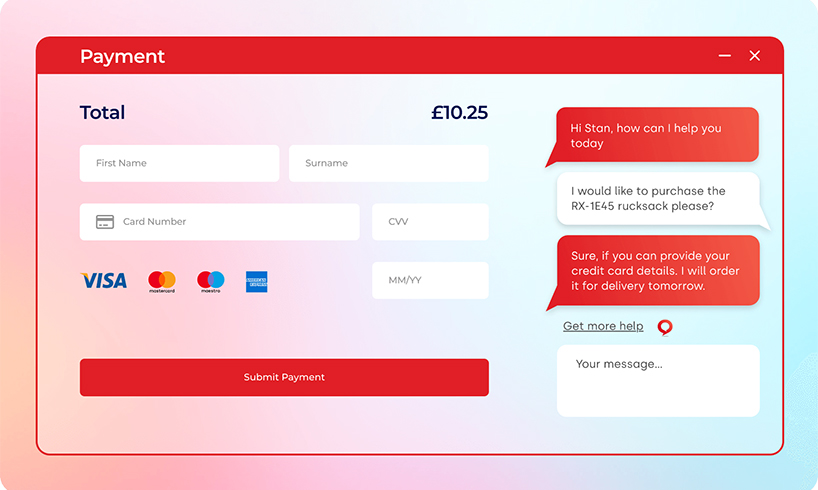
There are questions around privacy and payments introduce another layer altogether. Adyen points out that, particularly in the UK and Europe, today it is widely accepted a human is still required ‘in the loop’. But while payment companies are working on ways of allowing agents to transact securely using tokens and clearly defined permissions rather than simply handing an AI assistant your card details, banks are already raising concerns around fraud, scams, incorrect purchases and the handling of customer data as agentic shopping develops.
What should businesses be doing now?
When looking at their digital presence slightly differently, the first job for businesses is to make sure the information about products and services is accurate, detailed and structured. Product feeds need to contain more than a name, photograph and price. Descriptions need to answer genuine customer questions and explain differences clearly.
It is also worth looking at the questions customers repeatedly ask before buying. Those questions are a very good indication of the information an AI agent may also need when deciding whether your business is relevant. Businesses should review their delivery, availability, pricing, returns and service information too. The information hidden in images or marketing copy is going to be less useful in a world where machines are reliant on that data.
Perhaps most importantly, businesses should start monitoring where their traffic and enquiries are coming from. AI referrals may still look tiny beside Google today, but John Lewis's figures demonstrate the acceleration.
The customer may not visit your homepage first
For years digital marketing has been about getting people onto your website and encouraging them to browse, compare and eventually buy, but agentic commerce could start to change that journey.
If a customer has already asked an AI assistant to research a product, compare different retailers, look at reviews and narrow down the options before they arrive on a website they may have a fairly good idea of what they want and why, and could be landing ready to buy.
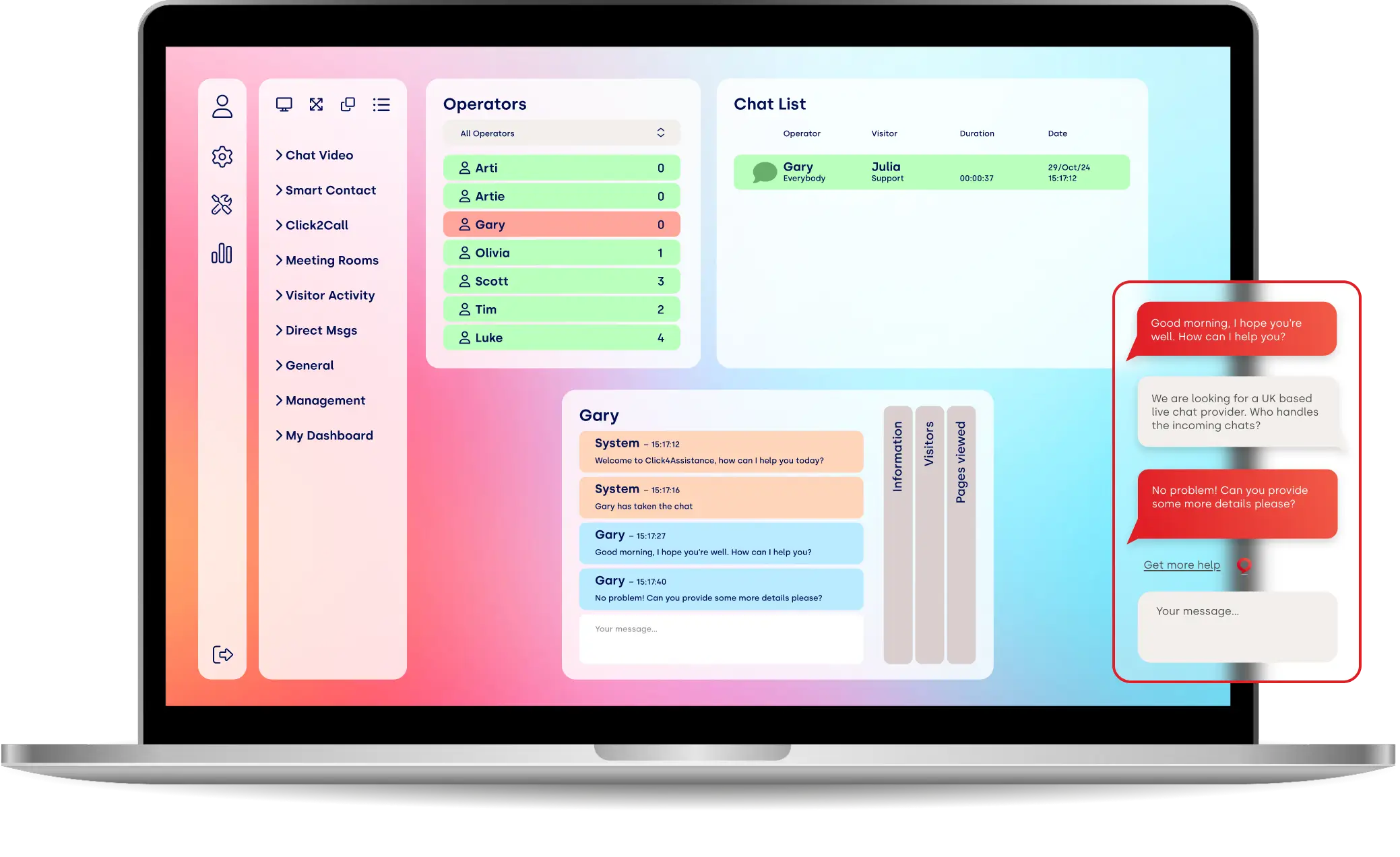
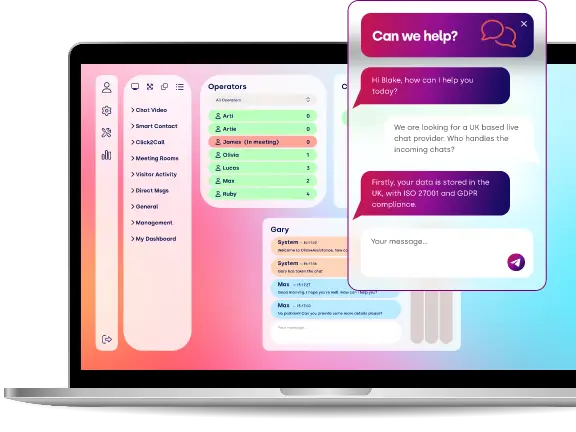
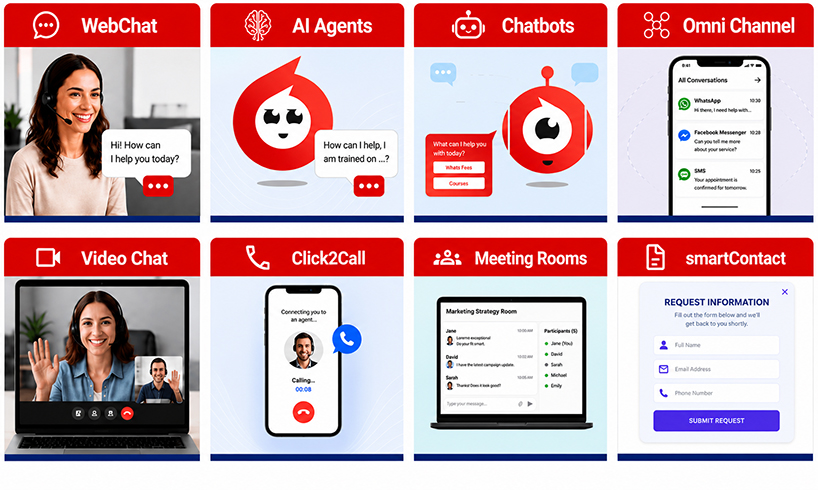
That makes the final part of the journey particularly important. Someone who has already done most of their research with an AI agent may only have one or two questions left before making a decision, so businesses need to make sure those questions can be answered quickly. Live chat, a well-designed chatbot or an AI agent for customer service that can provide accurate information about products, delivery, availability or returns could make the difference between completing the sale and losing a customer who was already very close to buying.
As agentic commerce develops, businesses will need to think about both sides of this journey: making sure AI agents have the information they need to recommend their products in the first place, and being ready for the customers they send their way.