













Bridging the Gap Between Conversation and Transaction



Nobody can dispute customer expectations have changed dramatically. Whether booking services, paying invoices, or completing purchases, customers expect transactions to happen instantly and with minimal effort. The organisations delivering the strongest customer experiences are offering the path of least resistance throughout every stage of the journey, including the point of payment.
Businesses are under pressure to deliver faster service while maintaining high standards of security, compliance and customer trust. This is creating a major shift in how organisations approach payment journeys during customer communications, recognising conversations and transactions should no longer exist separately. The BBC tech journalists have been talking about this for sometime.
The Problem With Traditional Payment Journeys
On many websites the payment process feels disconnected from the customer experience.
A customer may begin a conversation through live chat for customer support, then find themselves redirected elsewhere to complete payment. This often involves opening a new webpage, waiting for a follow-up email, making a phone call or navigating multiple systems.
For customers, this creates inconvenience and uncertainty. For businesses, it increases the risk of abandoned transactions, delayed payments and unnecessary pressure on customer service teams. The issue becomes even more significant in environments where speed and responsiveness matter.
If a customer is already engaged in a live chat and ready to act, they do not want to pause the interaction and move elsewhere to complete a transaction. These kind of interruptions and delay create avoidable abandonments.
Conversations Are Becoming Action-Oriented
Live chat widgets have existed for 20 years and has evolved way beyond basic customer support in that time. No longer simply a way for customers to ask questions, it is becoming a channel where complete customer journeys take place.
Customers now expect to:
- Ask questions
- Resolve issues
- Receive updates
- Confirm services
- Make decisions
- Complete transactions
With this all expected within the same interaction, we can observe a larger shift towards real-time customer experiences.
The businesses leading the way are reducing effort across the entire journey. The fewer barriers customers encounter between intent and action, the more seamless and effective the experience becomes.
Why Instant Payments Matter
The ability to take secure payments during a customer live chat creates several operational and customer experience advantages.
Faster Resolution Times
One of the biggest benefits is speed. When customers can complete a payment instantly during an active conversation, businesses can resolve interactions immediately rather than relying on follow-up processes.
This reduces delays and helps organisations move customers through service or support journeys more efficiently.
For example, customer service teams can:
- Confirm bookings
- Process account payments
- Take deposits
- Secure appointments
- Finalise purchases
- Resolve outstanding balances
When this doesn’t interrupt the conversation flow, this creates a more responsive and convenient experience for customers while improving operational efficiency internally.
Reduced Customer Drop-off
Every additional click, redirect or delayed payment request increases the risk of a customer abandoning a transaction. If payments become complicated or time-consuming, customers may postpone action entirely or leave the process before completion.
Integrating payments directly into live chat customer conversations helps reduce this risk significantly. By allowing customers to complete transactions at the point of engagement, businesses can improve conversion rates and reduce abandoned processes.
Lower Pressure on Customer Service Teams
Disconnected payment journeys often generate unnecessary inbound contact. Customers may need to phone, chase payment links, request clarification or confirm whether transactions have been completed successfully. Real-time payment capabilities help reduce these additional interactions.
Customer service teams can resolve enquiries and complete transactions in a single conversation, improving first-contact resolution and reducing operational workload. For organisations managing high volumes of customer interactions, even small improvements in efficiency can have a significant impact.
Security and Trust Remain High Priority
Security remains one of the most important considerations within digital payment experiences. While customers expect speed and convenience, they also expect organisations to protect their information.
Businesses therefore face a balancing act between creating frictionless journeys and maintaining secure handling of payment information. This is why many organisations are moving towards payment approaches that minimise the handling and storage of sensitive customer data.
Rather than storing payment details directly, businesses are starting to require an approach that direct customers into secure payment environments while allowing transactions to remain connected to the customer interaction itself, supporting both convenience and compliance.
By reducing exposure to sensitive payment information, organisations can strengthen customer trust while supporting internal security requirements and PCI considerations. As regulatory expectations around privacy and data security continue to evolve, businesses are placing greater emphasis on secure, integrated customer journeys.

Customer Experience and Payments Are Closely Linked
Historically, customer payments fell under operational processes, which sat separately from customer engagement, however, that distinction is rapidly disappearing.
Today, the payment experience forms part of the wider customer perception of a brand.
If payment journeys feel slow, disconnected or unnecessarily complicated, customers can start to associate that friction with the organisation itself. By contrast, fast and seamless payment experiences help reinforce professionalism, responsiveness and trust.
The quality of customer conversations is no longer measured solely by how quickly agents respond. It is increasingly shaped by how effectively organisations help customers complete actions during those interactions.
Real-Time Customer Service Is Expanding Beyond Support
The best live chat for customer service is no longer simply about answering questions. In recent times, customer service teams are expected to facilitate action. This may include helping customers complete purchases, make secure payments, or finalise transactions immediately
As a result, live digital communication channels are becoming more commercially important across organisations as businesses are recognising that customer conversations represent valuable moments of intent. When customers are actively engaged and ready to act, organisations need the ability to respond immediately. The ability to complete transactions during live chats helps reduce delays between intent and action.
Simplicity Matters More Than Ever
One of the biggest influences in customer satisfaction is simplicity. Customers are increasingly favouring businesses that make processes feel effortless. This applies just as much to payments as it does to communication.
The organisations creating the strongest customer experiences are often not those adding the most complexity or functionality. They are the ones removing unnecessary steps.
A streamlined payment experience inside an existing customer interaction can significantly reduce friction while improving convenience and efficiency for both customers and staff.
This also creates operational advantages internally. Reducing manual follow-up, minimising disconnected systems and shortening transaction journeys can help organisations improve service performance while creating more efficient customer service operations.
Connected Customer Journeys Have Become the Standard
Customers expect continuity across every interaction they have with an organisation. They do not separate communication, service and payment into distinct experiences. Instead, they view the entire interaction as part of a single journey. This is why businesses are investing more heavily in connected omnichannel communication platforms capable of supporting multiple stages of the customer experience within one environment.
Those of us that work within customer engagement have to realise the customer satisfaction is not simply about faster communication. It is about enabling customers to move seamlessly from conversation to resolution. Organisations that remove barriers between communication and action will be better positioned as customer expectations continue to evolve.
The Future of Customer Engagement
The future of AI powered customer engagement will be shaped by immediacy, simplicity and connected experiences. As we have discussed, Customers increasingly expect businesses to respond quickly, communicate clearly and enable action without unnecessary complexity.
As live chat and real-time customer communication continue to evolve, the distinction between conversations and transactions will continue to narrow. Businesses that embrace this shift will be better equipped to deliver the fast, seamless and secure experiences modern customers expect.
Customer conversations are becoming opportunities not just to inform, but to resolve, confirm and complete actions in real time.
Enabling Secure Payments Within Live Chats
Click4Assistance’s smartCast functionality has been designed to help organisations create more seamless journeys during customer live chat interactions. The functionality allows any URL to be embedded for display during the conversation.
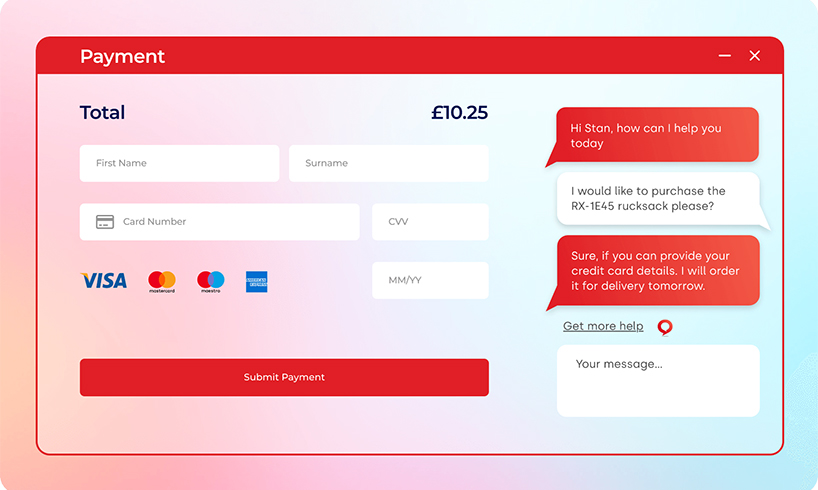
A feature that works particularly well with smartCast is embedded payment providers. The smartCast panel slides out directly from the chat window to present the payment gateway within the interaction itself, which creates a much smoother experience for the customer and, in our opinion, looks pretty cool too. Rather than sending customers away to another system or asking them to wait for a separate payment link, the transaction becomes part of the live chat conversation they are already having.
Click4Assistance developed smartCast to help organisations reduce friction in the customer journey while still allowing them to use their existing payment provider or gateway. The functionality simply connects to a secure payment environment via URL, meaning businesses do not need to replace their current payment setup or introduce additional complexity into their processes.
Security was also a major consideration in the development of the feature. Payment details are not stored within the Click4Assistance platform itself, helping organisations minimise unnecessary exposure to sensitive data while supporting secure payment handling and PCI requirements. That balance between convenience and security is increasingly important as customers expect faster and more seamless digital experiences.
To learn more about smartCast and how secure payments can be integrated into live customer conversations, watch the Click4Assistance smartCast overview or reach out to one of our knowledgeable and friendly account managers.