














A Case Study: How Live Chat and AI Supported Universities During Clearing
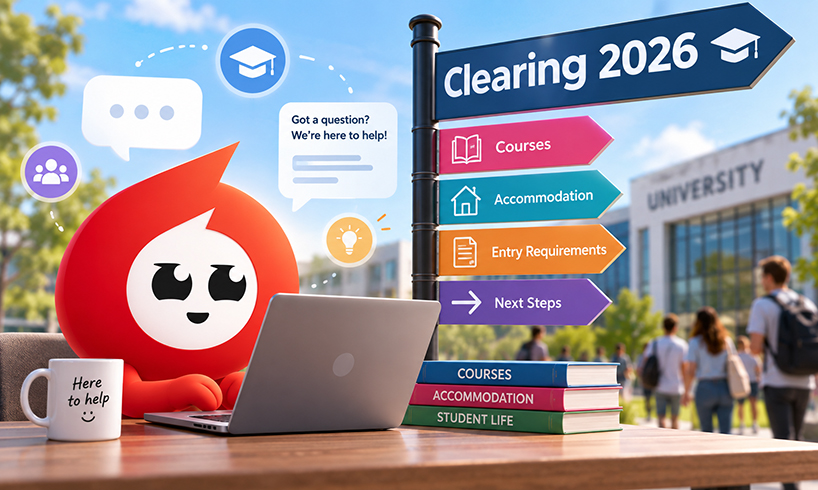

Clearing creates a concentrated period of demand for university admissions teams, with prospective students looking for quick answers as they consider courses, entry requirements and available places. Usage data from universities using Click4Assistance provides an insight into how live chat and AI chatbots supported students across this period.
The questions continue as students secure their places and begin thinking about the practicalities of university life. Accommodation can quickly become a priority, creating further demand for university teams in the days following A level results.
It shows how enquiry volumes changed around results day, how frequently chatbot conversations required human involvement and whether students felt they received the answers they needed.
During the month of August, chat volumes increased from July figures by 28%, with the busiest day coinciding with A level results day, when activity was almost 30% higher. Where a chatbot was used, only 20% of enquiries needed to be escalated to a human adviser.
Accommodation enquiries showed a slightly different pattern. The busiest day for accommodation-related live chat came four days after A level results day, while just 5% of chatbot enquiries required human escalation.
Student feedback adds another perspective. Among survey respondents using live chat for Clearing, 92% said they had their questions answered. For accommodation live chat, 85% said their questions were answered.
Together, these findings provide a useful picture of how live chat and AI can support universities through the immediate Clearing rush and the period that follows.
Managing the Clearing surge
Clearing presents universities with a communications challenge when a large volume of enquiries can arrive within a relatively short window.
Prospective students may be comparing courses, universities and entry requirements while making decisions within hours. They want to know whether places are available, whether their qualifications meet the requirements and what they need to do next, and many are in a heightened state of emotion.
Click4Assistance usage data shows the impact this can have on digital contact volumes.
The usage patterns highlight how sharply demand can intensify around key moments in the admissions calendar. A level results day represented the peak for Clearing-related conversations, reinforcing the need for universities to have sufficient digital support available when prospective students are most actively considering their options.
For university teams, this concentrated demand must be managed alongside applications, telephone calls, emails and more complex conversations with individual applicants.
Live chat provides another route for prospective students to contact a university while remaining on its website. Someone looking at a course or Clearing page can ask a question at the point it arises rather than moving to another channel. The student feedback suggests this was effective. 92% of surveyed users contacting universities through live chat for Clearing said their questions had been answered.
During a period when students may be making significant decisions quickly, providing access to an answer at the right moment can be particularly valuable.
How AI customer service software helped manage demand
Increasing the availability of digital communication also creates a capacity challenge. More conversations still need to be handled.
AI chatbots can help universities manage suitable enquiries by answering common questions and directing students towards relevant information. The data shows that only 20% of chatbot enquiries during Clearing required escalation to a human.
This means that four out of five interactions handled through the chatbot did not need a member of the university team to take over the conversation. That distinction matters during peak periods.
Some prospective students may have relatively straightforward questions about the Clearing process or where to find particular information. Other conversations involve individual qualifications, applications or circumstances that require the knowledge of an admissions adviser.
Using AI alongside live chat provides a way to support both types of enquiries while helping university teams concentrate their time where human involvement is most useful.
Results day is only one part of the journey
A level results day is an obvious focal point for Clearing communications, but the usage data shows that demand can continue and change in the days afterwards. This is particularly apparent when looking at accommodation enquiries.
While Clearing chat activity peaked on results day, accommodation-focused live chat for universities reached its busiest point four days later. The timing reflects how quickly students' priorities can change and develop.
Initially, the focus may be on finding a course and securing a place. Once that has happened, attention can turn towards accommodation. Students want to know where they might live, what options are available, how to apply and what they need to do next. For university teams, this can create another wave of enquiries shortly after the initial Clearing peak.
The data suggests that planning digital support around Clearing should therefore consider the wider student journey rather than concentrating resources solely on results day.
Supporting accommodation enquiries with live chat for universities
Accommodation is particularly suited to live chat because students often have questions while actively reviewing their options online. A student reading information about halls may want clarification about availability, application processes or room types. Having live chat available allows them to ask that question within the same digital journey.
Feedback from users of the service found that 85% of survey respondents using live chat for accommodation said their questions had been answered.
The chatbot data also demonstrates how automated support contributed to handling accommodation demand.
Just 5% of chatbot enquiries required escalation to a human adviser. In other words, 95% of these chatbot interactions did not need a member of staff to step in.
For teams experiencing a surge in enquiries after results day, this can provide valuable additional capacity. It also demonstrates how AI support can extend beyond admissions. As students’ progress towards starting university, similar approaches can support the practical questions that emerge during the next stage of their journey.
What the escalation rates tell us
The difference between the Clearing and accommodation escalation rates is interesting.
During Clearing, 20% of chatbot enquiries required human escalation. For accommodation, this fell to just 5%.
The purpose of AI support is not simply to achieve the lowest possible escalation rate. Some conversations should reach a person, particularly where a student's circumstances require judgement, specialist knowledge or a more detailed discussion. Instead, escalation rates provide an indication of how much routine demand can be handled without requiring staff to take over every interaction.
During Clearing, four out of five chatbot conversations did not require escalation. For accommodation, that rose to 19 out of 20.
This can make a significant difference when enquiry volumes increase suddenly. AI can provide an initial layer of support, while university teams remain available for the conversations that require their expertise.

Measuring the student experience
Operational measures such as chat volumes and escalation rates tell universities how their services are being used. Student feedback helps answer an equally important question: did people get the help they came for? The survey results provide a positive indication.
For Clearing live chat, 92% of respondents reported having their question answered. For accommodation live chat, the figure was 85%.
These results are important because they connect the technology with its purpose. During Clearing, students have a specific question standing between them and their next step.
For the large majority of surveyed users, the live chat interaction provided the answer they were looking for.
Meeting students where they are
For universities, managing demand during Clearing is also about considering how prospective students prefer to communicate.
The students going through Clearing are part of a generation accustomed to text-based, digital communication. Messaging provides a familiar way to ask a question and receive an answer while continuing to browse courses, compare options or discuss decisions with family and friends. Live chat brings that type of interaction directly into the university website. A prospective student can ask about entry requirements or the Clearing process without switching channels, making a telephone call or searching through multiple pages for an answer.
The pattern of enquiries seen during the Clearing period shows how this need for digital communication continues as students move towards enrolment. Clearing conversations peaked on A level results day, while accommodation live chat reached its busiest point four days later. As the questions change, the preference for an accessible, text-based way to communicate remains relevant. A student who initially wants to discuss course availability may return a few days later looking for information about accommodation and the practicalities of starting university.
AI agents for customer service can complement this experience by providing immediate responses to common questions, while live chat gives students access to university staff when they need more detailed assistance. Together, the channels allow universities to provide the convenience of digital messaging while retaining the option of a human conversation.
The interaction data can also help universities understand what students are asking at different stages of their journey. These insights can be used to refine AI responses, improve online information and ensure live chat teams are prepared for the subjects most likely to generate enquiries.
Combining a live chat service and AI during Clearing
The data provides a useful picture of the different roles live chat for universities and AI can play during one of the busiest periods in the university calendar.
Live chat gives prospective and incoming students access to a person when they need assistance. AI chatbots can answer suitable enquiries immediately and reduce the proportion of conversations that require staff intervention.
The results also highlight the importance of considering Clearing as a wider journey.
Chat volumes increased by 28% during the Clearing period, with the highest activity around A level results day. Accommodation enquiries followed their own pattern, reaching their live chat peak four days later.
AI helped absorb a substantial proportion of this demand as only 20% of Clearing chatbot enquiries and 5% of accommodation chatbot enquiries needed to be escalated to a human. Those escalated are passed over with the bot having collected relevant information to speed the process for both operators and students.
Alongside those operational results, the survey responses provide an indication of the student experience. Some 92% of surveyed Clearing live chat users and 85% of surveyed accommodation live chat and chatbot users said their questions had been answered.
With Click4Assistance live chat widget and Arti, its AI agent, universities can use these digital channels together, providing immediate answers where appropriate while keeping human support available for more detailed conversations.
For university teams preparing for future Clearing periods, the findings demonstrate the value of looking at more than the number of conversations received. When students make contact, when they need a person and whether they leave with an answer can all help shape a more effective approach to digital student support.
FAQ’s
How can universities use AI chatbots during Clearing?
Universities can use AI chatbots during Clearing to answer common questions about courses, applications, entry requirements and next steps. In the Click4Assistance usage data analysed, only 20% of Clearing chatbot enquiries were escalated to a human adviser, allowing university teams to focus on conversations requiring more individual support.
Does live chat help universities manage Clearing enquiries?
Live chat provides prospective students with a text-based way to contact universities while browsing their websites. During the Clearing period analysed, live chat volumes increased by 28%, while 92% of surveyed Clearing live chat users said their questions had been answered through the channel.
Can universities use AI chatbots for accommodation enquiries?
Yes. AI chatbots can support common university accommodation enquiries and provide information without requiring staff to handle every interaction. In the data analysed, just 5% of accommodation chatbot enquiries were escalated to a human adviser, while 85% of surveyed accommodation live chat users said their questions had been answered.
Why is live chat useful for prospective university students?
Live chat offers prospective students a familiar, text-based communication channel that they can use while researching courses, Clearing options and accommodation online. It provides quick access to university teams and can work alongside an AI agent to answer common questions, with human advisers available for enquiries requiring more detailed assistance.
When should universities provide live chat during Clearing?
Universities should consider providing live chat throughout the Clearing journey rather than focusing solely on A level results day. The Click4Assistance data analysed showed Clearing conversations peaking on results day, while accommodation live chat reached its busiest point four days later. This indicates that demand continues as students move from securing a place to preparing for university.