










Are AI Assistants Becoming the New Search Engines
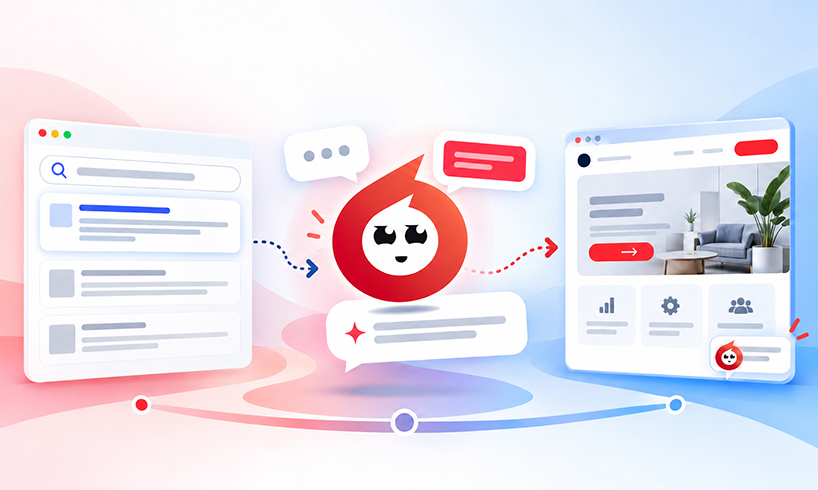




For years, Google has been the starting point for almost everything we do online. It's a familiar process, and one that has shaped how businesses approach their online presence, from website design and content to search engine optimisation and digital advertising. If AI assistants become an increasingly common starting point for customers, what happens to the traditional search journey, and how should businesses respond?
Whether we're looking for a local business, researching a product, comparing services or simply trying to find an answer to a question, we've become accustomed to typing a few words into a search engine and working our way through the results.
However, more recently, the way people search for information has been changing. Rather than relying solely on traditional search engines, people are increasingly exploring AI-powered tools such as ChatGPT, Google Gemini and Microsoft Copilot to help them find information, consider their options and make decisions. Instead of searching through several websites, they can ask a question, receive a response and continue the conversation until they have the information they need.
It's a shift that raises some interesting questions about the future of online search, particularly for businesses that have spent years working to improve their visibility on Google.
AI is becoming part of the search
The growing role of AI in search is now attracting attention beyond the technology industry. In September 2026, the UK's Competition and Markets Authority (CMA) published proposals aimed at giving consumers more choice over the search services they use. Under the proposals, users of Android phones and Google's Chrome browser would be offered a choice of search services, potentially including AI assistants alongside traditional search engines.
The CMA announcement is particularly interesting because it recognises how the search market is evolving. For a long time, discussions about search competition have mainly focused on traditional search engines and the dominance of Google. The inclusion of AI assistants suggests that regulators are now considering a much broader definition of what searching for information online might look like in the future.
There is something familiar about the CMA's latest proposals. They are reminiscent of the European Commission's intervention in 2009, when Microsoft agreed to offer Windows users a choice of web browsers rather than allowing Internet Explorer to benefit from its position as the default option. At the time, the concern was that Microsoft's dominance in operating systems gave Internet Explorer an advantage over competing browsers. The introduction of a browser choice screen was intended to make it easier for people to select alternatives, including Google Chrome and Mozilla Firefox.
Fast forward to 2026, and there are some interesting parallels. While the Microsoft case was about giving people a choice of web browsers, the CMA's proposals concern which search services people use, and whether AI assistants should be among those options.
The circumstances aren't identical, but the underlying issue is familiar. When one company controls a widely used platform, the services it makes available by default can have a significant influence on consumer behaviour and competition.
What's particularly interesting this time is that the discussion is no longer simply about which search engine people use. It's also about whether they want to use a traditional search engine at all, or whether an AI assistant might become their preferred way of finding information online.
From searching for information to asking for answers
One of the biggest differences between traditional search and AI-powered search is the way people communicate what they're looking for. Search engines have encouraged us to use keywords, often reducing detailed questions to a handful of terms that we hope will produce the right results.
If someone was looking for a new customer service platform, for example, they might search for 'best live chat software UK' or 'live chat for customer service’. They would then work through the results, visit different websites, compare features and perhaps read reviews before deciding which providers to contact.
With an AI assistant, that same person could explain what their business does, the challenges they're experiencing and what they're hoping to improve. They might ask which chatbot for customer service would be suitable for a UK business that receives a high volume of website enquiries, needs to manage conversations efficiently and wants to offer support outside normal working hours.
The AI assistant can then respond to those specific requirements, suggest options and help the user explore the differences between them. If the recommendations aren't quite right, the person can ask another question or add more detail without having to start the process again.
What makes this particularly interesting is that people don't necessarily need to know the correct terminology or even exactly what they're looking for. They can describe a problem in their own words and use the conversation to work towards a solution.
That doesn't mean the answers will always be correct. AI systems can make mistakes, misunderstand requirements or recommend information that is incomplete or out of date, but the convenience of being able to ask a question and refine the response could influence what people expect from online search.
How AI could change the customer journey
The implications of AI-powered search go beyond making it easier to find information. If people increasingly use AI assistants to research products, compare services and identify suitable providers, these tools could also begin to influence which businesses customers consider in the first place.
There is also a distinction between an AI assistant that helps someone find information and an AI Agent that can take action on their behalf. Although the terms are sometimes used interchangeably, AI Agents are generally designed to carry out tasks or support processes with varying degrees of independence. In a consumer setting, this could involve researching products, comparing options or, where the technology and integrations allow, helping someone make a booking or complete a purchase.
For businesses, however, the more immediate consideration may be how AI changes the discovery process. Traditionally, a potential customer might search Google, browse several websites, read reviews and gradually narrow down their options. With an AI assistant, some of that initial research could happen within a single conversation, with the customer asking for recommendations based on their particular requirements.

This could mean that by the time someone visits a business website, they have already compared several providers and formed an opinion about which might be most suitable. Equally, a business that would previously have attracted attention through its position in search results might find that it isn't included in the AI-generated suggestions a customer receives. Therefore, the possibility that AI could influence which businesses appear on a customer's shortlist raises important questions about online visibility and how businesses present themselves.
It also introduces another consideration for the customer journey. While AI assistants may increasingly help people discover businesses, website-based AI Agents can support the next stage, helping visitors ask questions, understand services and take the next step once they arrive. The two serve different purposes, but both reflect a broader shift towards more conversational interactions online.
What does this mean for businesses online visibility?
For years, businesses have invested considerable time and resources into search engine optimisation, creating content and improving their websites to appear more prominently in search results. Those activities aren't suddenly becoming irrelevant, but AI-driven discovery introduces another layer to the process.
AI assistants may use information from websites, directories, reviews and other online sources when responding to questions or recommending businesses. How they gather and present that information varies between platforms, and there is no guaranteed way to make a business appear in an AI-generated recommendation. However; it does appear that the quality and accessibility of online information are becoming increasingly important. If a business has outdated service descriptions or very little useful information on its website, it may be harder for both potential customers and AI-powered systems to understand exactly what it offers.
A business might provide an excellent service, but if its website doesn't clearly explain who that service is for, what problems it solves and how customers can get in touch, it risks making the discovery process more difficult than it needs to be. This is particularly relevant for smaller businesses, which may not have the same marketing resources or brand recognition as larger organisations. Clear website content, accurate business listings, informative service pages and genuine customer reviews can all help establish a more useful and credible online presence.
There's also an argument for thinking more carefully about the questions customers are asking. Rather than creating website content purely around popular search terms, businesses could benefit from addressing common concerns, explaining their services in straightforward language and providing practical information that helps people make informed decisions.
None of this requires abandoning traditional SEO or trying to optimise everything for AI. In fact, many of the fundamentals remain the same. The difference is that businesses may need to think beyond how their website appears in a list of search results and consider how their information might be interpreted and presented through an AI-powered conversation.
What happens when the customer reaches your website?
While much of the discussion around AI search focuses on how people discover businesses, there's another part of the customer journey that deserves attention. Even if an AI assistant helps someone research their options and identify suitable providers, there will often come a point when they want to speak directly to a business.
By that stage, the customer may already have done a considerable amount of research. They might understand the different services available, have a shortlist of providers and know roughly what they're prepared to spend. What they need next is becoming something more specific, such as clarification about pricing, confirmation that a service meets their requirements or reassurance before making an enquiry or purchase.
This is where the experience a business provides on its own website becomes particularly important. If customers are becoming accustomed to asking AI assistants questions and receiving immediate, conversational responses, they may be less willing to spend time searching through multiple website pages or waiting for an email reply.
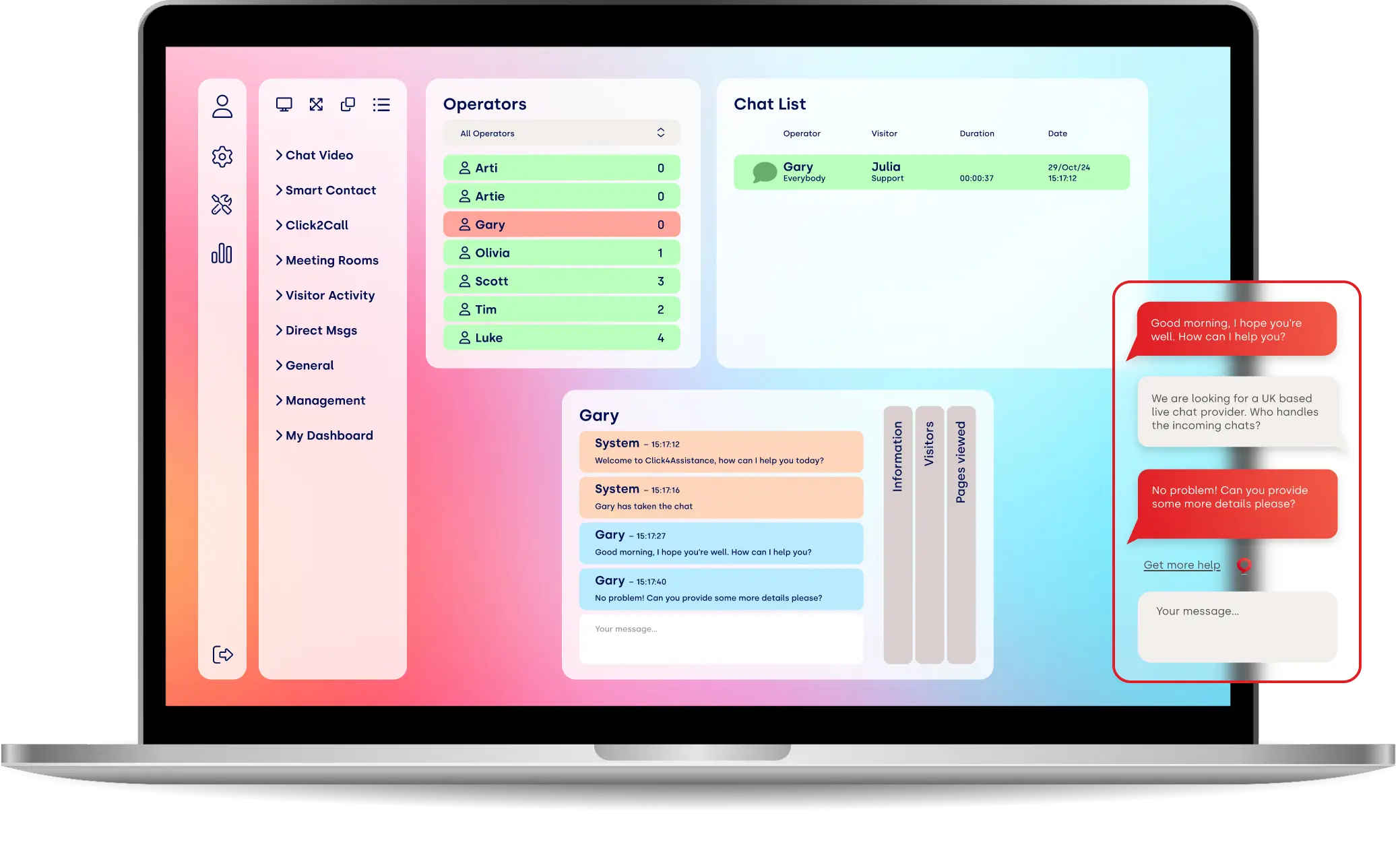
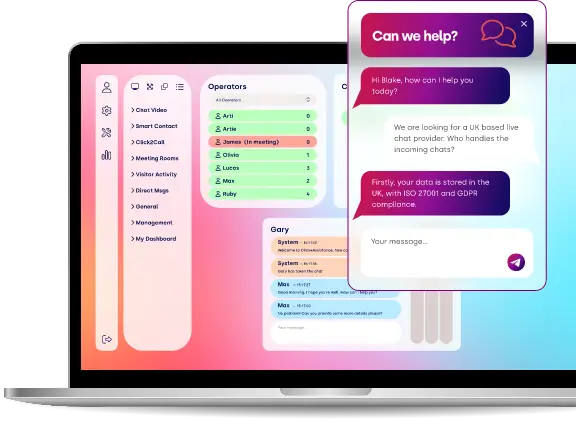
Live Chat for customer service has already helped businesses address some of these challenges by giving website visitors a direct way to ask questions and communicate with a team member. An AI chatbot for business can complement this by helping visitors find information, answering common questions and guiding them towards relevant products or services, provided they have access to accurate and appropriate business information.
For example, someone visiting a software provider's website might want to know whether a particular solution integrates with their existing systems. Rather than navigating through several pages, they could ask an AI chatbot for business, explore the available options and then request a conversation with the sales team if they need further advice.
For a service-based business, a chatbot for website could help visitors understand which services are relevant to their circumstances, explain the next steps or direct them towards making an appointment. The objective isn't necessarily to remove human interaction, but to make it easier for customers to get the information they need and connect with the right person when necessary.
The wider point is that the conversational experience shouldn't necessarily end when someone leaves an AI search tool and arrives on a business website. If people are becoming more comfortable using conversations to find information, it makes sense for businesses to consider how they support that behaviour throughout the customer journey.
Is this the beginning of a different kind of search?
It's still relatively early to predict exactly how AI assistants will influence search behaviour over the longer term. Traditional search engines are continuing to develop their own AI capabilities, while AI assistants are becoming more sophisticated in how they retrieve information, present sources and interact with other services.
It's also worth remembering that not everyone wants the same experience. Some people prefer to browse websites and compare information independently, while others may be happy to rely on an AI assistant to narrow down their options. The most likely outcome is that different approaches will coexist, with customers choosing whichever method best suits what they're trying to achieve.
For businesses, the challenge is not to predict precisely which technology will dominate, but to recognise that customer expectations are changing. Being easy to find online will remain important, but being easy to understand, communicate with and buy from could become just as significant.