














Is Your Customer Service Ready for Black Friday 2026?


Preparations for Black Friday often begin long before the first offer appears on a website. Marketing campaigns are planned, discounts agreed, stock levels reviewed and websites prepared for an increase in visitors. Considerable attention goes into getting customers through the digital door, but what happens when they arrive can be just as important.
A sudden increase in website traffic inevitably brings an increase in questions for customer service teams. Customers may want to know when an order will arrive, whether a particular size or model is available, how returns work or whether a promotion applies to something already in their basket. During a quieter trading period, these questions might be relatively straightforward for a customer service team to manage, but during Black Friday, the volume and speed can create a very different environment.
This is why Black Friday readiness should extend beyond website capacity, stock and promotional campaigns. Businesses also need to consider whether they are ready to communicate with the people those campaigns bring to their websites.
After all, being available to help them once they arrive can make the difference between a visitor who continues to purchase and one who leaves.
Black Friday changes the customer service environment
When Black Friday concentrates activity into a relatively short period, it can expose weaknesses in customer service processes that are less noticeable during normal trading.
A question that might usually receive an email response within several hours can feel much more urgent when a customer is considering a time-sensitive offer. Someone deciding between two products may want an answer before making their purchase, while another shopper may be concerned about delivery dates or whether an item will arrive in time for Christmas. If customers can’t find the information they need, they may not wait until the following day for a response.
Product specifications, availability, delivery costs, promotional codes, returns policies and expected delivery dates can generate repeated questions at any time of year. Customer service teams may find themselves answering the same relatively straightforward enquiries while more complicated customer problems wait in the queue.
There is also the issue of when customers choose to shop. Online retail does not operate according to contact centre opening hours, and Black Friday shoppers may browse early in the morning, during their commute, in the evening or late at night. Promotions themselves may begin before Friday and continue through the weekend into Cyber Monday, creating a sustained period in which customers expect information to be readily available.
These pressures can affect more than customer service metrics. They can influence whether somebody completes a purchase at all.
A customer with a question is in the buying journey
Imagine somebody has found a product they are interested in and added it to their basket, but they are uncertain whether it will work with something they already own. Another customer might want to confirm the returns policy before buying several sizes, while somebody purchasing a gift may need reassurance about delivery.
These are customer service questions, but they are also purchase questions.
If the answer is easy to find, the customer can continue. If not, the buying journey suddenly has an obstacle. The question is whether the shopper will continue to search on the website, send an email and wait, or simply open a competitors website.
This makes website communication particularly important during periods of high purchasing intent. Marketing has already done a lot of the work involved in attracting somebody to the site and encouraging them to consider a product. Helping the customer when uncertainty appears should be a natural extension of that journey.
Prepare before the traffic arrives
Preparation can begin with something relatively simple: reviewing the questions customers are already asking. Previous customer service conversations, emails, live chat transcripts and website searches can provide a useful indication of where customers regularly encounter uncertainty.
Businesses can then consider which questions are likely to become more common during Black Friday. Delivery times and stock availability may be particularly important, as might questions about discount codes, promotional terms, returns and exchanges.
This information should be reflected across FAQs, knowledge bases, product pages and other customer-facing content. The aim should not necessarily be to create an enormous library of information, but to make the answers customers are most likely to need easy to find and consistent across different channels.
Preparation also involves understanding what happens when self-service is not enough. Businesses need clear escalation processes so that employees know which enquiries require specialist assistance and customers are not repeatedly transferred between departments.
Staffing is another consideration. Historical demand can help businesses anticipate when enquiries are likely to increase, but Black Friday planning should also recognise that customers may contact a business outside its normal peak periods. Extending human support may be appropriate for some organisations, while others may use automation to provide additional coverage when employees are unavailable.
The important point is to decide how those channels will work together before demand increases.
Where the Best Live Chat Software for Customer Service can help
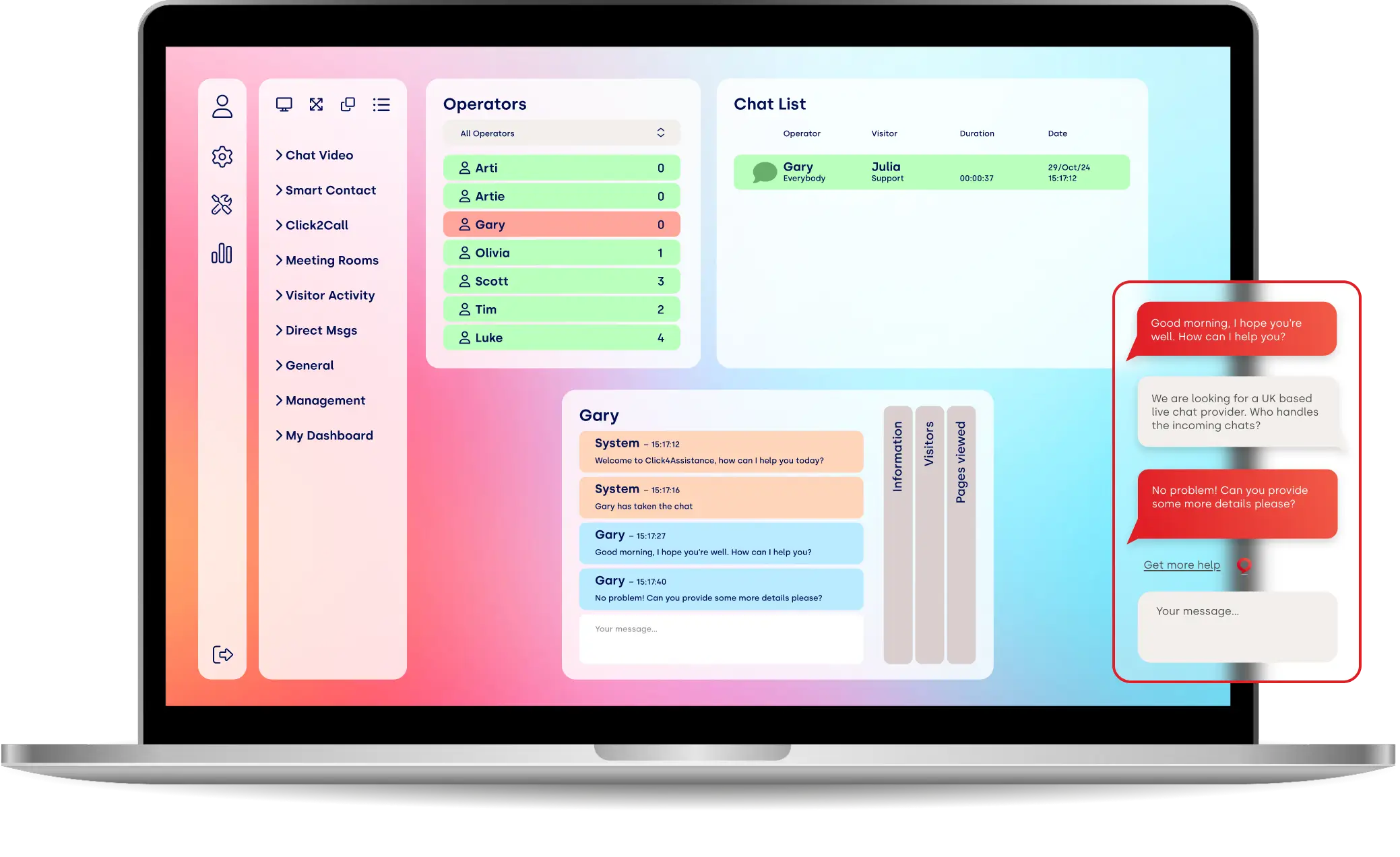
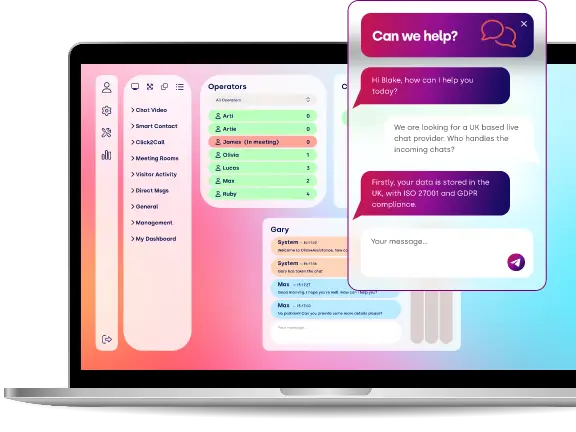
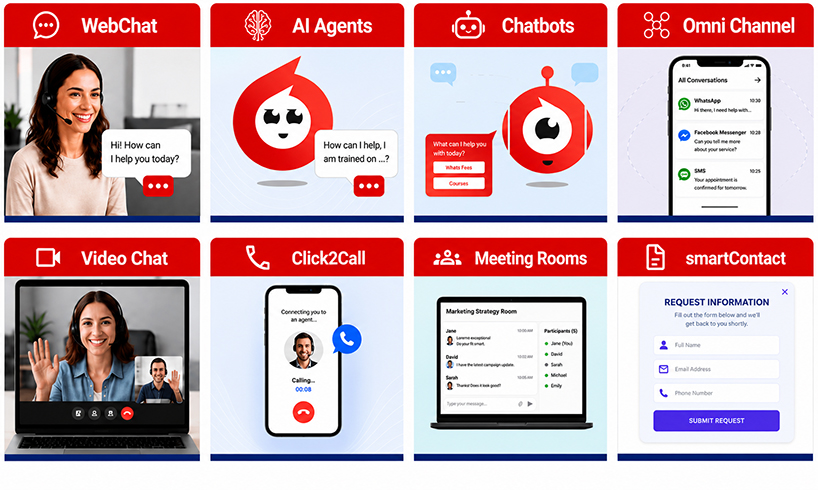
Live Chat for customer service has a particular role during Black Friday because it allows customers to ask questions without leaving the website or interrupting their shopping journey.
For somebody who is already considering a purchase, that immediacy can be useful. Rather than searching through several pages for an answer or sending an email, the customer can ask a question while continuing to browse.
- Is an item available in another colour?
- Will an order placed today arrive by a certain date?
- Can a promotional code be used alongside another offer?
Imagine losing a sale due to such a simple question. Being available to answer these questions can provide reassurance at the point when a customer is making their decision.
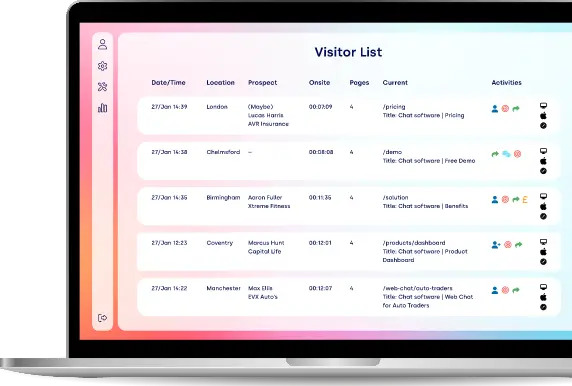
Live Chat can also give customer service teams useful context. With the best live chat software for customer service an advisor can understand which part of the website the customer is visiting and respond accordingly. Instead of beginning every interaction without context, the conversation can start closer to the customer's immediate need.
During Black Friday, the value of a Live Chat widget becomes particularly clear as more customers look for immediate support while they shop. Combining human agents with automation can help businesses extend that availability as demand increases, ensuring straightforward questions are answered quickly while giving customer service teams more time to focus on conversations where their knowledge and personal input can add the most value.
This creates an opportunity for human support and automation to work alongside one another, helping businesses maintain a responsive service even during the busiest periods.

Where Chatbots and AI Agents can help
Many of the questions generated during Black Friday are predictable. Customers want information about delivery, returns, products, orders and promotions, and a significant proportion of those enquiries may not require a human to resolve them.
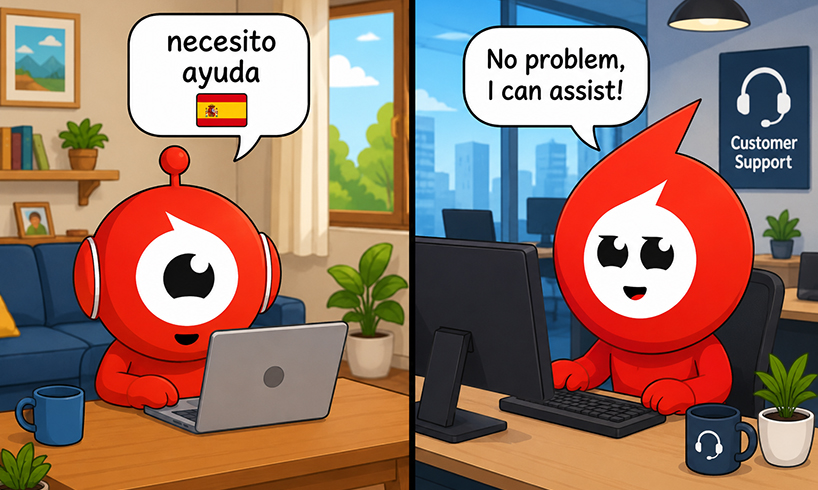
Conversational chatbots can provide answers to common questions at any time of day, allowing customers to find information even when the customer service team is unavailable. They can also manage multiple conversations simultaneously, which makes them particularly useful when website traffic increases suddenly.
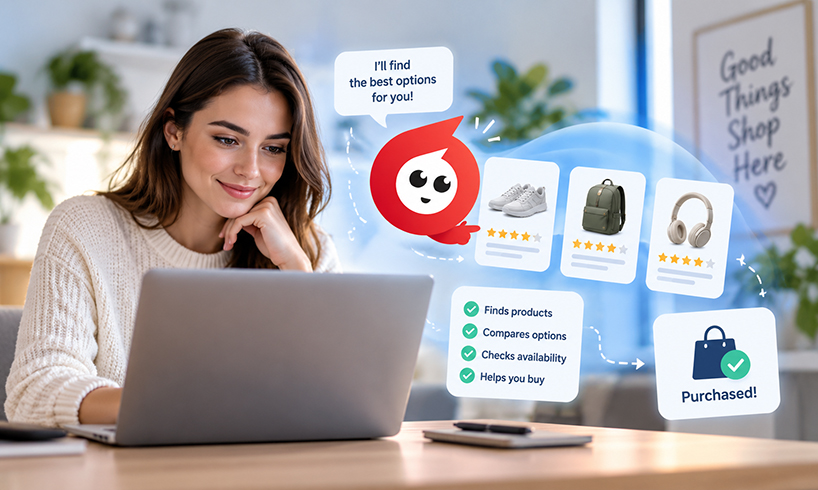
An AI agent for customer support extends this further, rather than simply presenting a predefined menu of questions and answers, an agent can understand what somebody is asking, retrieve relevant information and help guide the conversation towards an appropriate next step.
The value of automation in this situation is not necessarily that it removes humans from customer service. It can help separate enquiries that can be resolved quickly from those where human knowledge and judgement are more useful.
During Black Friday, that distinction matters. If automated support can handle hundreds of routine questions about delivery or returns, customer service employees have more time to deal with unusual problems, complex product questions or customers who genuinely need individual assistance.
Don't forget the human
As businesses introduce more automation, it can be tempting to measure success according to how many conversations can be completed without human involvement. That is useful operational information, but it should not become the only objective.
There will always be conversations where a person is the better option.
A customer may have a complicated problem that does not fit the information available to an AI system. They may be frustrated because an order has gone wrong, need advice about an unusual requirement or simply want to clarify something with somebody before making a significant purchase.
Customers should not have to repeatedly ask a chatbot to speak to a person or start the entire conversation again once they reach an employee. The context already gathered should move with the customer so that the human advisor can understand what has been discussed and why assistance is required.
This is particularly important during busy periods. Automation that prevents customers from reaching the right person can create another source of frustration, while automation that helps them reach that person with the relevant information can make the experience considerably smoother.
The aim should therefore be to use technology to support the conversation rather than placing technology between the customer and the business.
The benefits should continue beyond Black Friday
Black Friday may create the urgency to review customer service, but the improvements made for a busy weekend should not disappear once the promotion ends.
In the UK, Black Friday leads almost immediately into one of the busiest periods of the retail calendar. Customers move from searching for discounts to buying Christmas presents, checking delivery dates, tracking parcels and arranging returns and exchanges. Many of the same questions and pressures therefore continue throughout December and into the new year.
Live Chat continues to give customers an immediate route to the business, while Chatbots and AI Agents can continue answering routine questions outside normal working hours.
Perhaps more importantly, businesses can learn from the conversations themselves. The questions customers ask during a busy trading period can highlight unclear product information, confusing policies or gaps in the website journey. Reviewing those interactions afterwards can provide useful insight into where the customer experience could be improved.
Frequently asked questions
What is the difference between Live Chat, a Chatbot and an AI Agent?
A Live Chat service connects a website visitor with a human advisor who can answer questions in real time. A Chatbot automates conversations, typically answering common questions and directing visitors towards relevant information, while an AI Agent for customer support can provide a more contextual experience by understanding what somebody is trying to achieve, and determining the most appropriate next step. Businesses can use all three together rather than treating them as competing alternatives.
What types of businesses can benefit from a Chatbot?
Chatbots can be useful for businesses that receive a regular volume of predictable or repetitive enquiries, particularly when customers expect answers outside normal working hours. Ecommerce businesses, professional services firms, technology companies and other organisations can use the best AI Chatbot for business to answer common questions, direct visitors towards information and collect relevant details before a human becomes involved.
Can Live Chat, Chatbots and AI Agents work together?
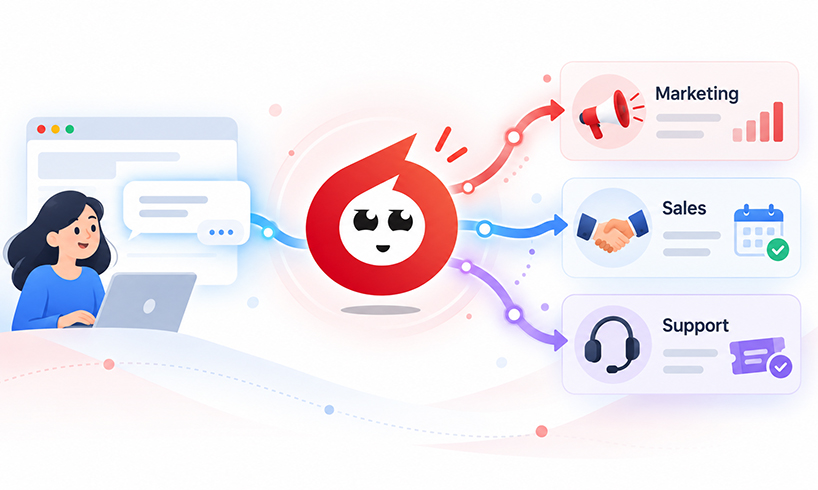
Live Chat, Chatbots and AI Agents can form different parts of the same customer communication strategy. Automated support can provide immediate assistance and handle straightforward enquiries, while human agents remain available for conversations requiring experience, judgement or a more personal approach. Creating a smooth transition between them can help customers reach the right form of support without having to restart their conversation.
How do I choose between Live Chat, a Chatbot and an AI Agent?
The right approach depends on the types of conversations customers are already trying to have with your business. If visitors frequently need personal advice, Live Chat may be particularly valuable, while a high volume of straightforward and repetitive questions may make a Chatbot useful. Businesses with more varied customer journeys may benefit from an AI Agent that can understand intent and direct conversations appropriately, supported by access to human agents when needed.
What should a business consider before adding Live Chat, a Chatbot or AI Agent to its website?
Start with the conversations customers are already trying to have with your business. Reviewing common enquiries, points of confusion and the stages where customers regularly need assistance can help determine where Live Chat or automation would be most useful. Businesses should also consider data security, what information the technology will need access to, how conversations will be escalated to human teams and who will be responsible for keeping the information customers receive accurate and up to date.